

How to import from China: from product brief to first commercial shipment
Plan a business import from China with practical guidance on suppliers, product compliance, documents, landed costs and decisions before the first shipment.
Start with the business decision, not the freight
Importing from China for resale or industrial use requires a coherent business operation. The primary question is not how much a container costs, but which product addresses a specific demand, in what quantity, and with what margin once it arrives in inventory. This guide covers commercial importing, not personal purchases or retail shipping rules.
International procurement planning must start with analyzing the domestic market. Precisely identify the target audience, distribution channels, and the product's expected turnover rate. Products without validated demand or with tight margins become financial liabilities when subjected to the fixed costs of the international logistics chain.
Prepare a specification sheet covering application, material, dimensions, performance, branding, packaging, and target quantity. Also define the maximum acceptable price in Brazil and the realistic replenishment timeframe. A cheap sample may conceal inadequate packaging, quality variations, or regulatory requirements that make the batch unviable.
When structuring the technical specification sheet, establish acceptable tolerances for weight, color, and finish. When these parameters are not formalized, the buyer loses the contractual basis to contest delivery discrepancies. Vague specifications are the main cause of frustration in the first commercial batch.
Consider the operation's cash cycle. Between issuing the purchase order, manufacturing, ocean freight, customs clearance, and domestic distribution, capital can be tied up for months. Calculating the initial order quantity must balance the manufacturer's minimum order quantity (MOQ) against your company's financial exposure limit.
Avoid the common mistake of selecting products based solely on the unit price displayed in digital catalogs. That figure rarely reflects the costs of adapting packaging for ocean transport, meeting domestic labeling requirements, and covering customs clearance expenses for nationalization.

Validate supplier and merchandise in parallel
Request the supplier's corporate legal documentation and confirm whether they manufacture or trade the product. Compare quotes based on the exact same specification. Verify who will receive the payment, and investigate any discrepancies between the banking beneficiary and the contracted company before transferring funds.
Documentary analysis of the Chinese company must include their local business license and confirmation of their corporate bank account. Personal accounts, accounts opened in third-party jurisdictions, or sudden changes to bank deposit details represent severe risks of commercial fraud and should halt negotiations immediately.
On the technical front, obtain catalogs, material breakdowns, and sufficient photographs to evaluate the tariff classification. Review administrative requirements and identify any necessary certifications, licenses, or authorizations before committing to shipment. The code provided by the seller is merely a clue, not a validation of the Brazilian NCM (Mercosur Common Nomenclature).
Determining the correct NCM classification is the importer's sole responsibility before tax authorities. Differences in chemical composition, intended use, or operating mechanism can alter tax rates and trigger approval requirements from specific federal agencies. Errors at this stage lead to fines and port delays.
For an industrial component, for example, approve a sample against measurable criteria: fit, strength, finish, and functionality. Agree on batch inspection protocols and the handling of rejected units. Approving based merely on a photograph shifts uncertainty to delivery, when rectifying the issue can be far more costly.
Formalize the order through a detailed proforma invoice and an international sales contract. In these documents, establish delivery deadlines, payment milestones tied to production stages, and the requirement for a pre-shipment inspection by an independent technical team prior to final balance settlement.
Physical inspection before container stuffing verifies quantities, master packaging, product integrity, and volume markings. Uncovering discrepancies at the factory allows for batch correction or renegotiation; discovering defects upon arrival in Brazil generates unnecessary customs expenses and logistics losses.
Choose the structure and calculate the full cost
Decide whether your company will import directly or use a structure with a trading company. Customs accreditation, party roles, and the origin of funds must align with the chosen model. A customs broker can represent the importer during clearance; however, this representation does not replace the importer's corporate obligations.
In direct imports, the company obtains its own authorization in the federal customs system and executes all steps using its own resources. This approach requires a qualified internal team or ongoing consulting support to manage suppliers, documentation, and foreign exchange contracts.
In structured imports with partners, the operation can be enabled through partnerships with experienced trading companies that assist with procurement management, tax planning, and end-to-end coordination. In this setup, cooperation with more than ten commercial partner companies provides regulatory flexibility and broader operational reach.
Customs handling gains security with support from partner brokers with over two and a half decades of market experience, capable of anticipating documentary requirements and managing complex inspection channel assignments at national ports and airports.
Destination infrastructure must also be planned in advance. Integration with partner warehouses in the Santos region ensures receipt, devanning, and controlled temporary storage, while partner multimodal distribution networks ensure efficient cargo delivery to your company's final distribution center.
Calculate the landed cost to the final destination: goods, origin transport, freight, insurance (when contracted), taxes, terminal handling charges, customs brokerage, inland freight, and financial expenses. Compare quotes using the same Incoterm and named place. Factor in buffers for exchange rate fluctuations and delays, without treating the contingency as a guaranteed cost ceiling.
The choice of Incoterm defines responsibilities and costs between buyer and seller. Terms such as FOB transfer international transport costs and risks to the importer once the cargo is loaded onto the vessel at origin, allowing the company to engage freight forwarders with transparent rate sheets for destination charges.
Calculate local terminal expenses, bill of lading release fees, stevedoring/handling, and port storage in detail. International freight is merely a fraction of total logistics costs; unexpected local destination fees often erode first-time importers' net margins.
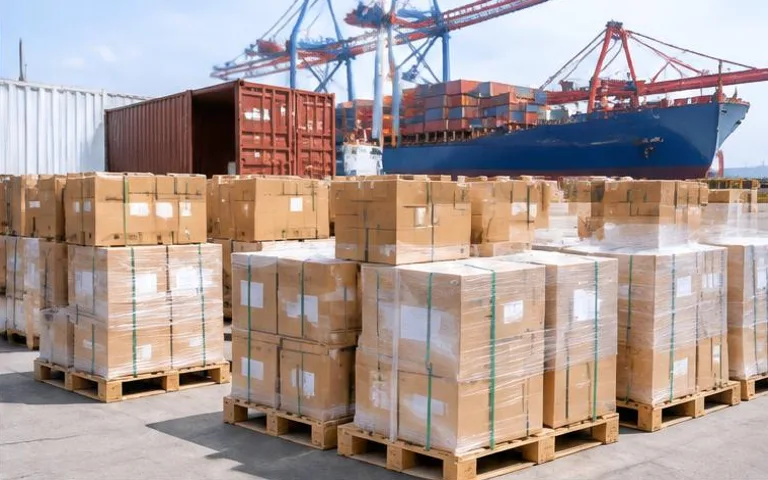
Checklist before authorizing shipment
Shipment authorization must be a joint decision among procurement, finance, and customs specialists. Errors on commercial invoices, discrepancies on packing lists, or incomplete descriptions on bills of lading halt customs clearance and incur daily demurrage and storage costs.
Upon arrival, reconcile quantities and quality against the purchase order, document discrepancies, and use the findings to refine the next batch. The first shipment must test the entire process, not just the supplier. Physical verification at the warehouse concludes the validation cycle and informs future order planning.
Prepare a post-operation report comparing the actual landed cost per cleared unit against projections. Identify variances in storage fees, clearance times, and trucking expenses. These takeaways refine the financial assumptions needed to scale imports on an ongoing basis.
FAQ: First-order questions
Is it worth starting with a small batch? It can be a way to limit exposure, provided fixed costs and regulatory requirements do not make the trial run unviable. Less-than-container-load (LCL) shipments absorb apportioned fixed customs and handling expenses that drive up unit costs. Run landed cost simulations before deciding.
Does a supplier platform guarantee compliance? No. Verification badges on B2B e-commerce platforms merely confirm a supplier's formal business registration or subscription to premium visibility plans. Commercial reputation, technical specifications, and import compliance are separate assessments that require dedicated documentary audits.
How can the risk of damage during ocean freight be reduced? Cargo protection relies on defining appropriate secondary and tertiary packaging in the purchase order. Require heavy-duty, export-grade corrugated cartons, ISPM-15 treated pallets, and protective edge protectors. Using desiccants inside the container prevents damage caused by moisture condensation during transit.
Does the planning have an expiration date? Yes. Regulatory environments and market conditions change frequently. For decisions made on October 31, 2026, reconfirm rules and conditions on the date of operation; this guide does not guarantee future timelines or replace a comprehensive product-specific analysis.
Official sources: