

Importing without RADAR: what a trading company can and cannot do
Compare trading services, domestic purchases and indirect importing without confusing support with an authorization exemption or a customs compliance shortcut.
Replace the Easy Promise with the Right Question
The phrase “importing without RADAR” often bundles entirely different situations under the same commercial label. In everyday corporate practice, this phrase can describe anything from a routine domestic purchase to complex contractual arrangements for indirect importation. In the worst-case scenarios, it can also mask irregular practices that jeopardize the hiring company's assets and operational continuity.
The Registry and Tracking of the Performance of Customs Interveners, known as RADAR, is the prior qualification granted by customs authorities for legal entities to operate in foreign trade via Siscomex. No commercial promise has the power to waive this statutory requirement. None of these options authorizes lending a qualification, concealing the real parties to the transaction, or ignoring ancillary tax obligations.
Before signing any contract or making overseas payments, executives must replace customs marketing hype with four fundamental questions:
Who actually negotiates with and purchases from the foreign supplier?
Who assumes the financial risk and provides the funds for the operation?
Which companies are formally listed on the shipping documents and the customs declaration?
Who assumes responsibility for the final commercialization within Brazilian territory?
The answers to these four questions draw a precise line between a strictly domestic purchase, an importation service provision, and an importation for pre-determined resale. A package's commercial name or a promise of logistical ease does not determine its legal nature before regulatory authorities.

Distinguish Between the Available Structures
To navigate safely and maintain tax compliance, a company must understand the practical, financial, and documentary differences among the operational structures available on the market.
The first structure is the domestic purchase of already nationalized goods. Under this model, the trading or distribution company acts on its own behalf: it imports the products using its own capital, assumes all commercial and logistical risks, clears the cargo through customs, and inventories the items in Brazilian territory. When your company purchases this batch, the transaction represents a standard commercial sale within the domestic market.
In a domestic purchase, the buyer assesses the sales tax invoice (nota fiscal), origin, technical product compliance, and delivery terms. The presence of imported goods at the beginning of the supply chain does not convert the transaction into a direct import by the end buyer. Consequently, for this domestic transaction, the buying company does not require a Siscomex qualification.
The second structure is importation on behalf of third parties (importação por conta e ordem de terceiros). In this model, the trading company acts as a specialized service provider hired to manage customs clearance and operational logistics in its own name, but on behalf of a principal company (the acquirer). A crucial detail that many overlook: the funds for the purchase and tax payments belong to the acquirer, and the goods are its property from the origin.
Under express customs regulations, for imports on behalf of third parties, the acquiring company must hold an active RADAR qualification compatible with the scale of the operation. In addition, the acquirer and the trading company must be formally linked in the Brazilian Federal Revenue Service (Receita Federal) system prior to registering the declaration. Therefore, under this modality, the trading company's involvement does not exempt the end client from holding a qualification.
The third structure is importation by pre-order (importação por encomenda). In this case, the importing trading company acquires goods abroad using its own capital, conducts the import in its own name, and, following customs clearance, resells these products to a pre-determined ordering entity based on a contract previously executed between the parties.
Even though the trading company uses its own capital to carry out the process, customs regulations require that both the importing company and the ordering entity be duly qualified in Siscomex and linked within official customs systems.
These models entail distinct requirements for qualification, party identification, and formal linking. Never assume the client is exempt simply because the trading company will register the declaration. You must also evaluate how advance payments are handled contractually: an isolated rule regarding funds should never replace a thorough assessment of the entire operation. Uncontrolled advance disbursements can compromise the legitimacy of an order and trigger tax assessments based on presumed fraudulent interposition of parties.
To choose among these models, executive leadership should apply objective decision criteria:
If the priority is to avoid dealing with import procedures and obtaining a RADAR qualification, the only legitimate path is to purchase already nationalized goods from local inventory in the Brazilian market, backed by a domestic sales tax invoice.
If your company needs to order specific items from abroad but does not wish to deploy immediate capital for offshore procurement, importation by pre-order may be viable—provided your company obtains its own Siscomex qualification to enable the regulatory linking.
If your company has the capital, negotiates directly with foreign suppliers, and seeks logistical and tax efficiencies through the expertise of a trading company, importation on behalf of third parties is the appropriate structure, which likewise requires that your RADAR be active and compatible with the transaction values.
Choose Your Partner Based on Execution Control
Identifying the correct legal modality is only the first step. Operational success depends on the governance and execution control of the selected partner.
Always request a detailed proposal that transparently breaks down service fees, applicable federal and state taxes, reimbursable port expenses, excluded services, and contractual obligations regarding document acquisition and retention. Identify in advance who decides on suppliers, international freight, cargo insurance, and shipping approval. Demand full visibility over payments and financial reporting consistent with the chosen model.
In customs and logistics execution, the support of a well-structured network makes a measurable difference in mitigating costs and contingencies. Coordinated operations with a partner network of over ten trading companies and customs brokers with more than 25 years of practical experience allow for tailored operational solutions suited to each type of cargo and logistical route.
Likewise, relying on partners who operate warehousing facilities within the Santos port complex and integrated multimodal distribution systems ensures agility in receiving containers, handling consolidated cargo, and expediting transfers to distribution centers or manufacturing plants across different regions of Brazil.
However, these network and infrastructure capabilities cannot replace an objective evaluation of the contracted partner's technical availability, product expertise, and internal documentary controls. They do not constitute an automatic guarantee against unforeseen delays, immediate license approvals, or miraculous cost reductions.
Be openly skeptical of proposals that treat RADAR qualification as something that can be “lent,” that avoid identifying the actual buyer to customs authorities, or that offer a flat “door-to-door” rate without detailing foreign exchange, tariff, and logistics assumptions.
Also determine in advance how the contract addresses adverse scenarios: order abandonment, foreign manufacturer delivery delays, container demurrage and detention fees, physical transit damage, and potential tariff classification (NCM) discrepancies raised by tax auditors.
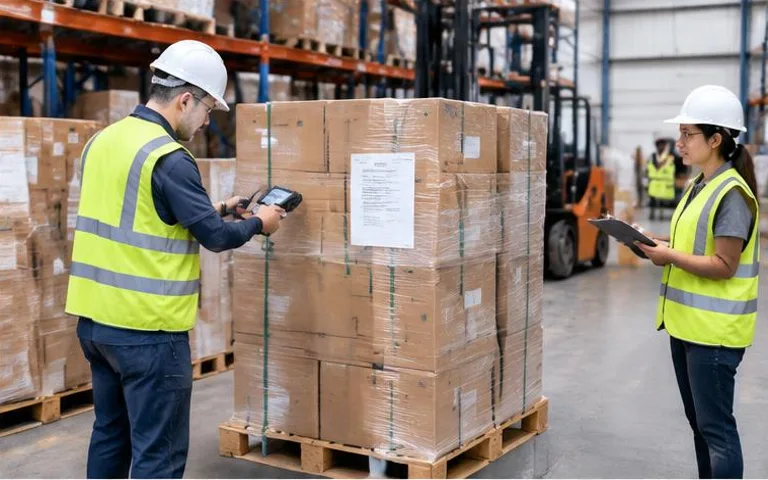
Checklist for Comparing Proposals
When evaluating quotes from trading companies and service providers, use this practical guide to compare proposals on an equal footing:
Always compare proposals based on the exact same product, tariff classification, volume, packaging, origin, final destination, and scope of work. A service that appears cheaper in an initial quote may exclude essential customs procedures that will later be billed as extras or, worse, result in cargo held in the primary customs zone without a designated party accountable for resolving the impasse.
FAQ: Where Is the Line Drawn?
Can the trading company simply use its RADAR on my behalf?
This framing is conceptually flawed and operationally hazardous. RADAR is not a transferable or rentable business license. The operation must strictly conform to a legally recognized model, such as direct import, import on behalf of third parties, or import by pre-order. In every indirect import scenario, the acquiring or ordering company must also hold its own Siscomex qualification and link its corporate tax ID (CNPJ) to that of the intervening trading company on the customs portal.
Does buying products in Brazil turn my company into an importer?
A genuine domestic purchase of goods that have already been cleared and nationalized by third parties is distinct from importing cargo. When a company purchases cleared goods from the local inventory of a distributor or trading firm, the transaction is governed by domestic trade regulations and documented with a standard Brazilian sales tax invoice. The buyer acts strictly as a domestic customer and does not require RADAR qualification, provided the actual facts of the transaction support this arrangement and do not conceal a disguised import mandate.
What can and cannot a trading company do in indirect imports?
An authorized trading company can provide advisory services for international negotiations, coordinate international logistics and cargo insurance, intermediate bonded warehousing, perform customs clearance, and arrange domestic transport to the final destination. Conversely, a trading company cannot conceal the identity of the true cargo owner, register declarations without the mandatory Siscomex linking, operate with buyers who lack their own qualification when required by law, or issue tax documents containing information at odds with the material facts of the transaction.
What should be reviewed by October 31, 2026?
On that date—as with any recurring governance milestone—companies should review the active official requirements established by customs authorities, existing service contracts, and the operational limits of their active qualifications. Regulatory shifts in foreign trade occur regularly; executives should never assume that conditions remain indefinitely unchanged or that qualifications have been universally waived. All documentation and proof of tax compliance for business partners must be periodically revalidated.
Official Sources: