

Inmetro certification for imported tires: from scope to border controls
Understand certification, registration, ENCE and LPCO without confusing scope exclusions with testing exemptions.
Checked: 2 November 2026. This article supports transaction planning and does not guarantee approval. Check the current treatment by NCM classification, attributes, purpose and customs regime before contracting or shipping; consolidated administrative texts do not replace the official gazette, DOU.
Start with the tire, not the certificate
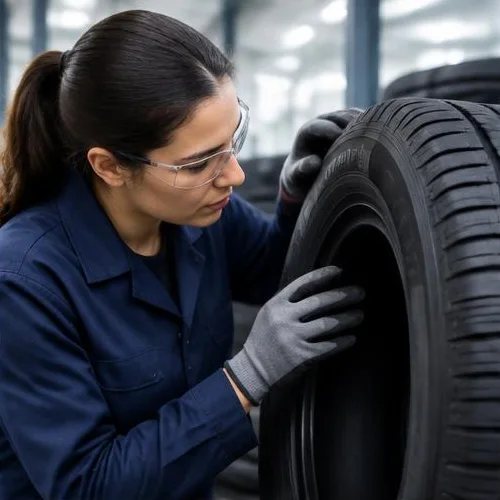
Importing new tires starts with identifying the actual product rather than searching for a license. Inmetro Ordinance 379/2021 covers specified tires for motorcycles and mopeds, passenger and mixed-use vehicles, commercial vehicles and their trailers. It should not be applied indiscriminately to every rubber product described as a tire. Fiscal classification helps locate administrative treatment but does not replace technical assessment against the annexes.
Build a product sheet identifying the manufacturer, production site, brand, model, dimensions, construction, intended application and proposed family. Compare commercial information with physical markings and the technical catalogue. A generic invoice description can conceal differences that matter for scope, testing and registration. Foreign approval may form part of the available documentation, but it does not by itself establish compliance with Brazilian requirements.
Certification, registration and import control are different steps
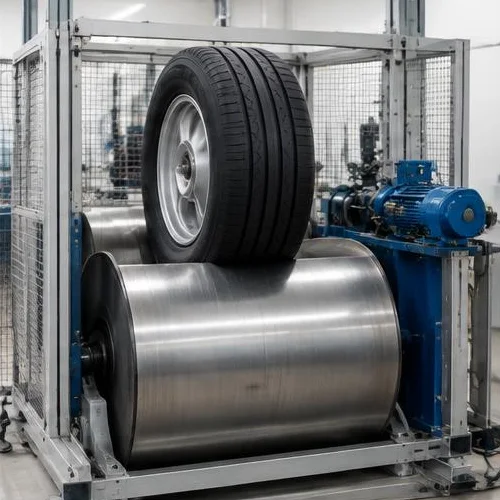
The verified route involves a Product Certification Body, or OCP, appropriately accredited by Cgcre for the object concerned. The applicant supplies technical documentation and undergoes Model 5 assessment: evaluation of the factory quality system, sampling, and applicable laboratory safety and performance tests. Detailed requirements belong in Annex IV and the relevant general certification requirements, not in a simplified commercial checklist.
After the OCP certificate come Inmetro object registration, conformity identification and, where required, ENCE labeling. Certification also requires ongoing surveillance. The certificate, object registration and import consent are not alternative names for one document. An OCP does not replace customs or Ibama. Assign separate owners and maintain separate evidence for each workstream, while ensuring that they all describe the same product and applicant.
What changed in the 2026 treatment
Siscomex Import Communication 012/2026, published on 12 February and effective from 13 February 2026, replaced LPCO I00014 with I00160, “Tires subject to registration,” treatment I1155. The change concerns NCM 40111000, 40112010, 40112090 and 40114000 when ATT_13200 = 01, and also changes application attributes in the product catalogue.
A specific communication is not a universal filing manual. Check transaction eligibility and current administrative treatment before transmitting information; do not automatically repeat an old LI instruction or generic LPCO route. Another timing issue is Ordinance 845/2025’s amendment to article 15 of Ordinance 379/2021. Its 23 October 2026 adjustment deadline concerned families already certified and registered when Ordinance 329/2020 was published. It was not a deadline applying to every new tire.
Scope exclusions are not performance exemptions
The correction of 20 May 2022 addresses specified applications, including bicycles and certain low-speed, off-public-road or exclusively agricultural, competition, military, industrial/forklift and nonmotorized uses. Avoid reducing this collection of provisions to “anything below 80 km/h is exempt.” The April 2026 FAQ wording can be confusing; consult the corrected normative text and establish the actual application.
There are also exemptions from wet-grip, rolling-resistance and noise requirements for categories including diagonal tires, temporary-use tires, motorcycle tires and collector-vehicle tires. Do not infer that an exemption from those performance tests removes safety certification. Record exactly which obligation is excluded and which remains, with the supporting scope provision. This distinction matters when budgeting tests, choosing markings and explaining the product’s compliance status to a distributor.
Hypothetical example: two lines, different assessments
A distributor plans to buy passenger-car tires and tires advertised exclusively for forklifts. It should not reach one combined conclusion merely because both lines come from the same supplier. For passenger tires, it assembles the technical family information, confirms the OCP route and checks registration and Siscomex treatment. For the second line, it requests evidence of industrial application and compares it with the corrected scope.
If an old certificate identifies a family existing in 2020, the team investigates whether the adjustment deadline, already elapsed at this article’s reference date, applies. It assumes neither that the old document is sufficient nor that all stock is automatically prohibited. Documents and applicable provisions, rather than the seller’s description, determine the next questions.
Checklist before contracting and shipping
FAQ: documents and scope
Does ENCE function as an import license? No. It is a labeling requirement where applicable, not a substitute for import consent or object registration.
Can I rely only on Ordinance 544/2012? That is not sufficient for the current consolidated regulation. Use Ordinance 379/2021, its annexes, corrections and relevant amendments.
Does the October deadline cover a completely new family? Do not extend it automatically. The verified provision concerns families already certified and registered when Ordinance 329/2020 was published.
Does registration remove Ibama obligations? No. Product conformity and environmentally adequate destination of waste tires require different analyses. Neither constitutes a promise that the shipment will clear customs.
Practical version control for the tire family
As a recommended internal routine, assign the technical team custody of the family sheet and the regulatory owner responsibility for checking its correspondence with the certificate, registration and identification. Purchasing should forward any supplier change before confirming the order. A different factory, dimension, construction or application should not disappear inside a revised commercial catalogue.
Use a change log recording the previous description, proposed description, date, information source, affected documents and person responsible for assessment. Retain the superseded version as history, clearly marked against reuse in another transaction. The import coordinator should work from the version released for that order rather than attachments received informally.
If markings, technical data and the certificate disagree, pause internal document signoff and refer the discrepancy to the technical owner and, where needed, the OCP. Record the conclusion and update related files before resuming the workflow. This is a management recommendation, not an additional legal requirement or a guarantee of approval.
Official sources and next steps
- Portaria Inmetro 379/2021
- Inmetro: legislação e alterações
- Siscomex: Comunicado Importação 012/2026
- Inmetro: pneus e hipóteses de exclusão
Return to the origin page, explore tire reverse logistics, import licensing and LPCO, or contact our team to organize a document review. Advice cannot replace the competent authority’s decision.