

New tires: control product families, registration and traceability
Tire purchasing must connect application, model compliance and batch traceability.
Strategic analysis by Jiuann Teng — editorial baseline: 10/31/2026. This is neither news nor confirmation of a regulatory change on that date. The decisions outlined below depend on the specific product, intended purpose, and actual operation. Reconfirm the applicable regulatory text prior to contracting and prior to shipment.
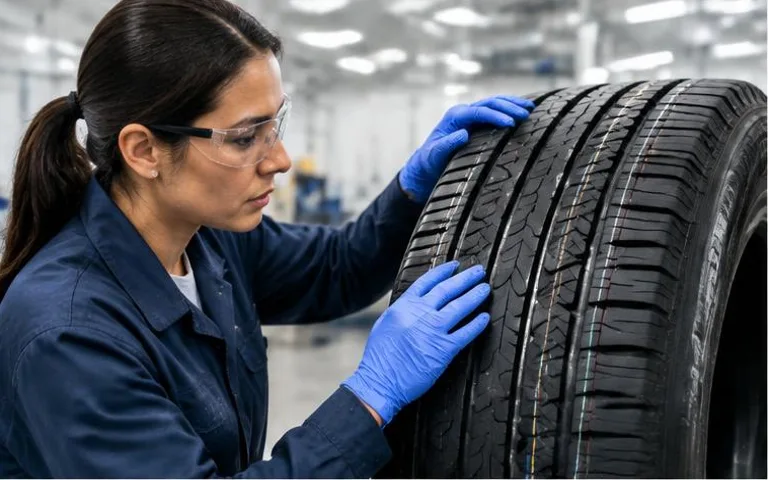
Do not buy based on a generic tire description
This guide addresses new rubber tires for commercial use, not an authorization to import used or retreaded tires. Identify size, construction, load index, speed rating, application, and brand. Tires intended for passenger cars, motorcycles, or commercial vehicles must not be grouped together simply because they fit in the same container. The purchasing decision must match the product that will actually be sold.
In the international trade of automotive components, the most common mistake at the start of negotiations is accepting broad, simplified descriptions on proforma invoices. A commercial description is no substitute for an exact technical classification. Treating a heavy-duty radial tire with the same code and description as a conventional light-commercial model creates immediate discrepancies before consenting regulatory agencies and customs inspection.
Verify classification within Inmetro's regulated scope, the status of certification and registration where required, and the alignment between product family, manufacturer, and models. Receiving an image of a conformity mark or seal is not enough. Request verifiable documentation and identify who is legally responsible for maintaining compliance. A certificate valid for a specific rim radius or aspect ratio does not automatically cover other sizes within the same product line without a formally approved scope extension.
Also review the administrative treatment and applicable attributes in the Single Portal (Portal Único); a previous order does not automatically validate new dimensions or applications. The granted registration binds the exact manufacturing plant to the importer and the specific model. When a manufacturer operates multiple production plants across different countries, documentation from one factory cannot be transferred to a product from another without a new formal conformity process.
Decision criteria for supplier selection:
- Proven ability to present technical certificates aligned with the specific manufacturing plant of shipment.
- Formal commitment to maintain sidewall marking codes identical to those registered in Brazil.
- Contractual agreement that any modification to compound, index/rating, or tread pattern requires prior written authorization.
Inventory must preserve product identity
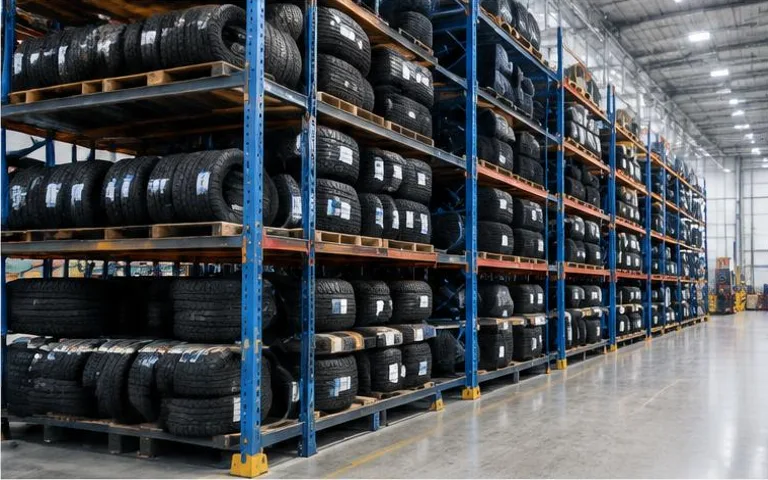
Plan lot traceability and manufacturing identification using agreed-upon, technically justified acceptance criteria. Avoid purchasing mixed stock without visibility into age and storage conditions. Establish warehousing that shields the product from improper conditions, and document how deformations and damage will be addressed. These commercial decisions are not presented as a universal statutory shelf life.
Preserving the physical integrity of tires requires logistical discipline from loading at the port of origin to the destination warehouse. For importers operating with partner infrastructure—such as partner terminals and warehouses in the Santos region—the receiving inspection must verify whether there has been excessive stacking, bead crushing, or exposure to extreme heat, moisture, and chemicals. Improper storage alters tire geometry and makes proper mounting impossible, causing commercial losses even before products reach the market.
Investigate trade defense measures by description, origin, and manufacturer, rather than solely by generic industry category. Antidumping duties and countervailing measures apply based on specific criteria involving dimensions, tread designs, and countries of origin. A superficial review that considers only the general tariff heading may conceal substantial additional duties, disrupting cash flow upon arrival at port.
Separately verify environmental obligations applicable to the importer. The fact that a model is compliant with Inmetro does not, in itself, resolve all tax and environmental obligations. Marketing new tires entails legal responsibilities tied to reverse logistics and environmentally sound disposal after the product life cycle. Budgets must account for managing these responsibilities, without using quality certificates as a substitute for legal review.
Common mistakes in inventory management and compliance:
- Mixing lots from different production weeks on the same pallet without recording them in the inventory management system.
- Failing to physically inspect batch codes and mandatory markings during container destuffing.
- Overlooking payment obligations or compensation plans for environmental liabilities associated with the imported volume.
- Confusing technical certification compliance with exemption from active trade defense measures.
Checklist for releasing the lot
The lot release process requires rigorous sequential steps. Before giving final approval for the supplier to stuff the container or dispatch the cargo, execute the following operational checklist:
Step 1: Document and technical reconciliation
Step 2: Regulatory and administrative verification
Step 3: Customs and environmental audit
Step 4: Tracking control and after-sales support
Authorize shipment only after securing this unbroken chain of identity. If the supplier proposes substituting an unavailable model with an apparently equivalent one, reopen the evaluation before accepting. In distribution, maintain the link between received lots and fulfilled customer orders; this information can be decisive when investigating defects and organizing a proportional response.
Turn the quote into a financial decision
Compare suppliers based on landed cost into usable inventory, not merely ex-factory price. The origin unit price is only a fraction of total outlays. To determine the true cost of goods placed in the warehouse, the calculation must incorporate all operational and tax variables.
Core components of the landed cost:
- Value of the goods at origin factory or port.
- Origin inland freight and consolidation charges.
- International freight and contracted cargo insurance premium.
- Import duties and taxes applicable upon customs clearance, plus any trade defense duties.
- Port terminal handling charges (THC) and warehousing expenses.
- Customs brokerage fees and specialized customs service charges.
- Inland freight from the port to the distribution center and handling costs.
- Financing costs of capital tied up during transit and clearance periods.
Separate confirmed figures from estimates. A quote with fewer line items does not necessarily cover more services; request inclusions, exclusions, and responsibilities in writing. Proposals that omit local destination charges frequently pass unforeseen costs to the importer at the most critical stage of clearance.
Model three scenarios: operation according to plan, clearance delays, and a partially rejected lot. Do not assign probabilities without evidence. Calculate the impact on cash flow, inventory availability, and margin, including the cost of failing to fulfill customer commitments. The chosen alternative must remain viable under adverse conditions; a contingency reserve is neither a guarantee of savings nor a contractual ceiling on expenses.
Financial criteria for selecting among proposals:
- A margin of safety sufficient to absorb additional container demurrage and detention periods without wiping out operating profit.
- Contractual transparency regarding the pass-through of currency fluctuations and fuel surcharges.
- Cash flow capacity to endure potential cargo holds for physical customs inspection without compromising operational disbursements.
Governance to authorize and learn
Tire import operations demand a clear internal governance framework. Establish an objective responsibility assignment matrix: record who approves specifications, regulatory classification, payment, and shipment. Clear delegation of authority prevents technical decisions from being overridden by the urgency of commercial deadlines.
Verify bank beneficiaries through an independent channel and cross-reference invoices, packing lists, and technical descriptions prior to cargo pickup. Clerical discrepancies between the transport document and the import declaration trigger customs requirements that prolong cargo dwell time at the port. Consult the Brazilian Federal Revenue (Receita Federal) Customs Manual to guide customs clearance and Siscomex to verify administrative treatment. Do not assume that a previously used workflow remains available or that every product will follow the same declaration path.
To execute structured operations at national scale, operations can rely on integrated ecosystems of commercial and logistics partners. Importers with mature governance typically coordinate with networks of more than 10 partner trading companies, draw on the technical expertise of partner customs brokers with over 25 years of industry experience, and leverage strategically located partner warehouses in Santos alongside partner multimodal distribution networks. This coordination ensures that offloaded cargo is inspected, warehoused, and dispatched to consumer markets with agility and documented traceability.
Following receipt, compare projected versus actual costs, record damage and rejections, and investigate the root cause of every variance. Update future orders using this evidence. The role of an advisory service is to coordinate information and contracted service providers; it does not entail owning terminals, warehouses, carriers, or proprietary physical infrastructure.
Frequently Asked Questions
Why does Inmetro compliance for a tire not authorize the import of any model from the same manufacturer?
Technical certification in Brazil is structured around specific product families, dimensions, construction characteristics, and manufacturing plants. Each granted registration covers specific models produced at an audited manufacturing address. Models with different load indexes, different rim diameters, or produced at other facilities within the same corporate group require independent technical verification and a formal scope extension.
What precautions should be taken if the supplier suggests substituting unavailable sizes prior to shipment?
No technical specification substitution should ever be accepted automatically. Altering the size, speed rating, or load index can invalidate the product's classification under the issued import license, while risking the shipment of items lacking valid Brazilian registration or subject to unforeseen antidumping duties. Any substitution demands fresh documentary and regulatory verification before container stuffing is authorized.
How can traceability be ensured if a quality issue arises after the sale?
Effective traceability depends on linking the serial number or production lot (the week/year identification code branded on the tire sidewall) to the inbound fiscal invoice and outbound sales invoices issued to distributors and fleet operators. This internal control allows exact identification of which customers received goods from a given production lot, enabling targeted recalls or replacements without freezing entire inventories.
How do trading, warehousing, and customs brokerage partners add security for the importer?
Importing tires involves stringent tax, regulatory, and physical handling requirements. Collaborating with experienced partners—such as partner trading companies, partner customs brokers with extensive clearance experience, partner warehouse operators in Santos, and partner multimodal distributors—allows companies to anticipate documentary discrepancies, ensure proper physical handling against structural and bead deformities, and provide operational predictability across the supply chain.
Sources and analytical limits
Public sources consulted on 10/31/2026. Informational guidance pages do not substitute for official statutory texts or case-specific consultations. The historical references identified below are not presented as current events.