

International air freight: manage urgency without losing control
Plan international air freight around chargeable weight, documentation and final delivery. Keep urgent imports from concealing costs and clearance gaps.
Urgency Requires an Economic Assessment
Air freight makes sense when the value of immediate availability outweighs the mode's additional cost. A replacement part that prevents a factory line shutdown, an essential component required to meet a strict contractual deadline, or a sample for technical homologation justify opting for air transport. Even so, the speed of an aircraft cannot compensate for poor advance planning, pending import licenses, or discrepancies in cargo descriptions.
Before authorizing a high-cost operation, executive leadership must demand an objective economic assessment. This evaluation must weigh the total logistics cost of the air shipment against the operational and contractual losses it aims to prevent. When the financial impact of imminent losses is demonstrably higher than the international freight rate, air shipping ceases to be an unexpected expense and becomes a strategic asset protection measure.
A fundamental step in this analysis involves evaluating shipment splitting. Rarely does a company need an entire production batch immediately to sustain operations. In many situations, splitting an order between air and ocean freight achieves the ideal financial balance. The air shipment carries just enough volume to supply the assembly line for the initial weeks, while the remaining volume moves via ocean freight at more competitive rates.
To enable combined supply chain strategies, an integrated partner network makes all the difference. Coordinated support with over 10 partner trading companies enables the review of purchase orders, alignment of international commercial terms (Incoterms), and rescheduling of partial billings with foreign suppliers, ensuring that the split shipment proceeds without documentation friction or unnecessary duplicate costs.
Executive decisions should be guided by clear, objective criteria:
- Verify whether an operational shutdown will genuinely occur before the standard transit time of alternative modes.
- Calculate the contractual penalties resulting from delays in final delivery to the client.
- Confirm whether the quantity requested via air represents the minimum safety buffer rather than the entire inventory.
- Check whether import documents are ready for immediate filing prior to pickup at the supplier.
Common mistakes made by managers at this initial stage include:
- Approving expedited shipping without first verifying the factory's actual immediate consumption capacity.
- Shipping full orders when only a subset of critical components would resolve the manufacturing bottleneck.
- Overlooking destination airport fees and warehousing costs by focusing solely on base freight rates.
- Authorizing cargo pickup before the exporter has fully issued all final commercial documents.
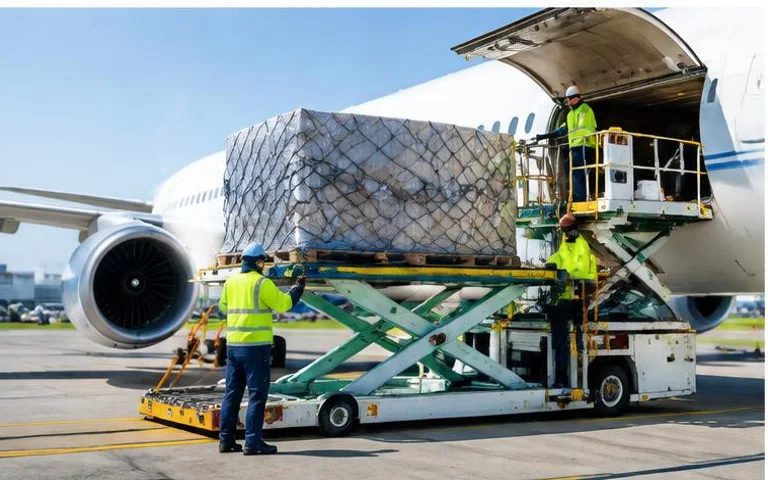
Understanding Chargeable Weight
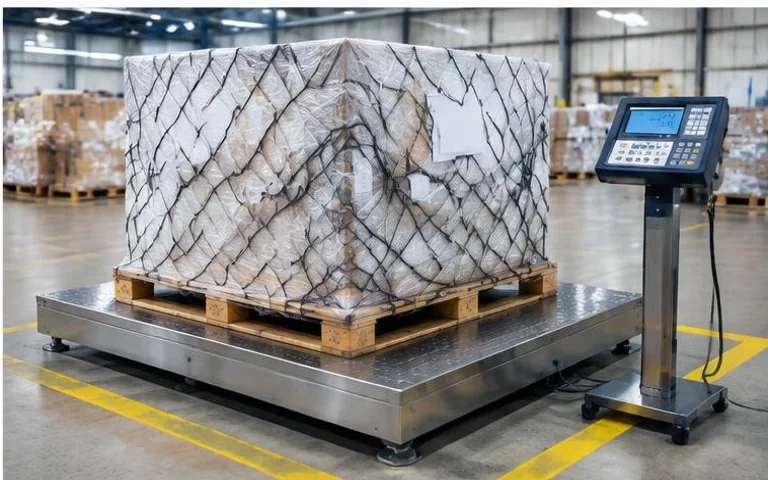
In international air freight, rates are not calculated simply from the reading on the scale. The amount charged by airlines is based on chargeable weight, which is determined by comparing the cargo's actual gross weight with its volumetric (dimensional) weight. Commercial and freighter aircraft have strict payload and internal cubic capacity limits, meaning lightweight, bulky cargo takes up space equivalent to that of dense, heavy shipments.
The volumetric factor (dim factor) used by airlines establishes a standard ratio between the cargo's external volume and its billable weight. As a result, how the supplier packages, packs, and palletizes the product directly impacts the final cost. Minor overhangs on pallet edges or oversized boxes exponentially drive up freight costs without providing any added safety or protection for the transported goods.
To control air transport costs, the logistics team should follow a systematic pre-shipment verification process:
- Request a detailed packing list from the supplier showing the final external dimensions of each packaged unit, not just the unpackaged product dimensions.
- Calculate the volumetric weight of each individual pallet or box in advance and compare it against the verified gross weight.
- Assess with the manufacturer whether box sizes can be optimized or pallet layouts adjusted to eliminate dead space.
- Determine whether freight charges are tiered by chargeable weight brackets and check if a slight volume adjustment could achieve break-point rate savings.
Evaluating the commercial proposal requires the same technical rigor. Executives should not accept lump-sum quotations that lack an itemized breakdown. The freight forwarder's quote must transparently itemize origin pickup, terminal security fees, origin handling charges, fuel surcharges, pure international air freight, local destination airport charges, brokerage/handling fees, and final road freight delivery. Furthermore, a simple estimated quote does not represent a confirmed aircraft space booking; ensure the booking is firmly confirmed with the airline before triggering subsequent operations.
Transporting chemicals, equipment containing lithium-ion batteries, pressurized items, and magnetized materials requires immediate technical classification. These goods fall under international dangerous goods regulations and are subject to strict handling and acceptance protocols. Omitting batteries or chemical compounds from documentation to secure lower rates or bypass red tape leads to severe delays, security hold-ups at transit airports, and hefty administrative penalties.
When the operation involves pre-consolidation or physical adjustments to shipments, support from partners with warehousing infrastructure in Santos and other strategic logistics hubs enables cargo inspection, physical integrity checks, and proper staging before entering the air stream or connecting to complementary modes.
The Clock Keeps Ticking After Landing
The total lead time of an international air shipment extends far beyond flight hours. One of the most frequent misconceptions in decision-making is assuming that landing time equates to cargo availability on the factory floor. The airport logistics cycle involves complex pre-flight and post-flight phases that must be factored into leadership's timeline.
The complete operational cycle encompasses pickup at the supplier's facility, transfer to the origin airport, origin cargo terminal check-in, export customs clearance, ULD (air container) loading, the flight including any transit layovers, destination terminal unloading, cargo deconsolidation, fiscal clearance channeling, and final customs clearance. Any documentation discrepancy on the ground brings cargo movement to a standstill, nullifying the speed gained in the air.
Documentation coordination must occur before the flight even takes off. The commercial invoice, packing list, air waybill (AWB), and technical certificates must be fully aligned regarding cargo descriptions, weights, Mercosur Common Nomenclature (NCM) / HS codes, and tax classifications. A generic description on an invoice or a discrepancy between the physical weight on the waybill and the declared quantity can flag the shipment for time-consuming physical inspections by customs authorities.
In this regulatory environment, partnering with licensed customs brokers with over 25 years of clearance experience is essential. These specialists pre-validate legal requirements, ensuring that advance import licenses have been approved and that data entered into foreign trade electronic systems is flawless. Brazilian customs authorities maintain strict, automated controls over incoming airport manifests and cargo, meaning that the physical speed of air transport does not exempt shipments from full regulatory compliance.
Once customs clearance is granted, the final leg must be ready for immediate execution. Cargo cannot afford to sit at the airport terminal due to lack of an available delivery vehicle. Coordinated dispatch with multimodal distribution partners secures dedicated transport for terminal pickup and secure transit to the consignee's facility, completing the time-critical cycle with speed and end-to-end traceability.
Authorization Meeting Checklist
Use this structured checklist to guide corporate validation before signing off on high-cost air waybills:
Once delivery is complete, record the all-in transport cost and conduct a root-cause analysis. Categorizing whether the urgency stemmed from internal procurement forecasting errors, supplier manufacturing delays, or unforeseen external disruptions enables executive leadership to identify structural supply chain bottlenecks and minimize future emergency freight spending.
Frequently Asked Questions
Does international air freight guarantee immediate customs clearance?
No. While air transport significantly shortens physical transit time, customs inspection adheres to the same statutory parameters of document compliance, tax review, and potential physical examinations required under Brazilian customs law. Incomplete or inconsistent documentation will stall cargo regardless of the chosen transport mode.
Does reducing packaging size always lower air freight charges?
It depends on the chargeable weight. If the actual weight exceeds the calculated volumetric weight, shrinking the outer dimensions will not reduce the rate applied by the airline. However, if the cargo is lightweight and bulky, reducing outer dimensions directly decreases chargeable weight and total freight costs.
When is it worth splitting a shipment between air and ocean freight?
Split shipments are recommended when a company must replenish an assembly line immediately to avert production shutdowns, but does not need the complete order right away. In these cases, a minimum buffer quantity is flown in to cover initial operations, while the balance travels via ocean freight at significantly lower rates.
What happens if the cargo contains batteries or restricted materials?
Shipments containing lithium batteries, chemicals, or pressurized substances are classified as dangerous goods. They require specific manufacturer technical declarations, UN-certified packaging, and prior airline approval before pickup. Attempting to tender restricted items without proper declaration leads to immediate cargo impoundment at air cargo terminals.
Sources and Editorial Reference
Editorial reference: October 31, 2026. Operational conditions and regulations must be confirmed for each individual shipment.