

International cargo insurance: cover the exposure you actually face
Review coverage, exclusions, deductibles and claims procedures for international cargo insurance. Match protection to the route and contractual responsibilities.
Do Not Confuse Contracted Transport with Transferred Risk
Contracting a carrier does not mean that all cargo loss or damage is covered. A provider's liability is governed by specific rules and conditions and often falls far short of the cargo's full economic value. Cargo insurance must be evaluated as an independent instrument with clearly defined coverage, limits, and obligations.
Many managers assume that contracting international freight automatically transfers all operational risks to the ocean carrier, airline, or motor carrier. In maritime law and international transport conventions, carrier liability is historically limited by statutory regimes, international treaties, and standard terms. Under various scenarios—such as force majeure events, severe weather, general average, or salvage operations—carriers may be exempt from liability, leaving the cargo owner without direct recourse.
The primary question is who bears the risk at each stage of the operation. The applicable Incoterm helps clarify this division, but it does not specify the complete insurance policy required. Commercial terms dictate where physical delivery obligations end and how freight costs are allocated; they do not substitute for the terms and conditions of a structured insurance policy. Importers, exporters, and intermediaries must know who is obligated to procure insurance and who holds the legal right to file a claim when a loss occurs.
This distinction is critical when an operation involves multiple logistics handoffs. In operations coordinated with the support of more than 10 partner trading companies, establishing unambiguous contractual liability is the first line of defense against operational disputes. If a company does not hold a documented insurable interest under the policy on the date of the loss, the claim settlement can be legally denied by the insurer.
Another common error is assuming that the carrier's liability policy protects the cargo owner against financial loss. A carrier’s legal liability policy exclusively protects the carrier's own balance sheet against third-party claims where carrier negligence or fault is formally proven. Conversely, marine cargo insurance belongs to the shipper or consignee, protecting the goods themselves against accidental loss and covered perils, regardless of whether negligence or willful misconduct by the driver or vessel master can be established.

Turn the Route into an Exposure Map
Map every leg: pickup, intermediate storage, handling, international transit, customs clearance, and final delivery. Confirm coverage inception and termination points, covered territories, and conditions governing extended dwell times. Never assume that insurance tied to the main transit leg automatically extends to subsequent movements.
Logistics routing is rarely linear. Cargo departing an overseas manufacturing plant typically undergoes local consolidation, inland drayage, dwell time at an origin bonded facility, international ocean or air transit, discharge at a Brazilian port, physical customs inspection, and onward domestic delivery. When cargo is discharged and utilizes structures such as partner warehousing in Santos, it is essential to verify whether the policy covers dwell time within bonded areas and for how long that coverage remains in effect.
Factor in the specific nature of the goods, packaging standards, theft attractiveness, fragility, moisture sensitivity, and temperature requirements. Used machinery, specialized equipment, or high-risk routes may require bespoke underwriting terms. Accurately disclose all material facts, as the insurance proposal must reflect the actual risk and operational profile. Concealing that machinery is refurbished or altering the declared Harmonized Tariff Schedule (HTS) code breaches the principle of utmost good faith, compromising the validity of the policy.
Determining the proper insurable value requires strategic executive oversight. Insuring only the commercial invoice value (FOB) leaves a company exposed to substantial unrecoverable costs. In Brazilian import operations, international freight, insurance premiums, import duties (owed or paid), and customs expenses constitute the bulk of the total capital deployed. If goods suffer damage during domestic road transit following customs clearance, insuring only the base commercial purchase price will result in severe cash-flow losses.
Scrutinize conveyance limits, valuation methods, deductibles, and policy exclusions. Broad commercial phrases do not guarantee protection against all consequential outcomes. Delays, loss of market, and consequential financial damages are rarely covered without explicit policy endorsements and specialized underwriting review. Deciding between basic named-perils coverage and broad coverage (such as standard Institute Cargo Clauses (A) / "All Risks") depends on product sensitivity, the transport mode, and executive risk appetite.
Post-port distribution also presents concentrated risk. Coordinating with multimodal distribution partners requires verification of active policies across road, rail, or cabotage (coastal shipping) legs. Pre-carriage and on-carriage coverage must align seamlessly with the master international policy to prevent coverage gaps the moment cargo departs the primary port zone.
Loss Prevention Is Also Part of the Contract
Examine all policy warranty clauses regarding packaging standards, risk management protocols, vehicle tracking, armed escorts, or the mandatory use of approved logistics providers. Purchasing an insurance policy is insufficient if its operating covenants are neglected. Align these requirements with the parties managing dispatch and distribution to ensure practical compliance in the field.
The general conditions of transport insurance policies contain mandatory warranties. Most prominent among these is the Risk Management Plan (PGR). Depending on cargo valuation and theft profile, insurers may condition claim validity on strict compliance measures: prior driver background checks, uninterrupted satellite monitoring, mandatory stops restricted to authorized locations, nighttime driving curfews, and dedicated armed escorts.
A failure to comply with any of these stipulations during inland transit in Brazil can release the insurer from its obligation to pay, transforming a recoverable loss into an unmitigated loss for the enterprise. For this reason, partner customs brokers with more than 25 years of experience work closely with carriers and risk monitoring agencies, ensuring cargo only departs once all mandatory security approvals are active and validated in the system.
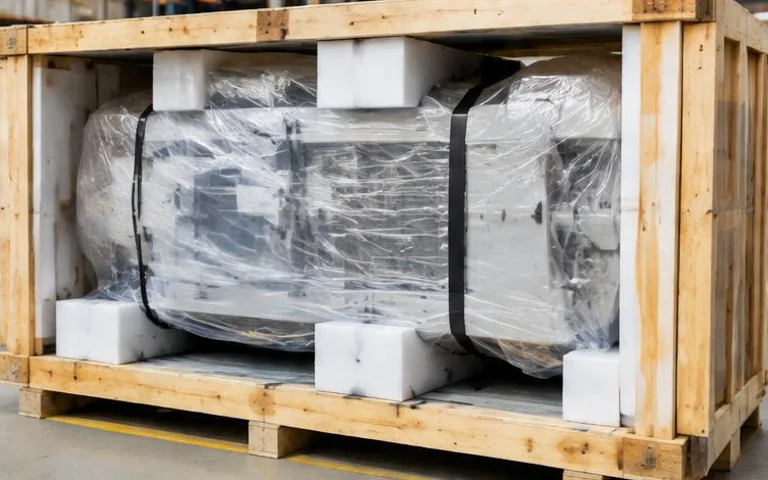
Packaging integrity is another sensitive point. Standard cargo insurance policies exclude losses resulting from insufficiency or unsuitability of packaging (often categorized alongside inherent vice or improper pre-shipment stowage). If heavy equipment is loaded into an ocean container without adequate blocking, bracing, and lashing, or lacks adequate moisture barriers for an ocean voyage, marine surveyor findings of improper container stuffing will result in claim denial.
Seek written clarification from the insurance broker or underwriter on any ambiguous policy wording. Verify the formal identification of all named parties and applicable contract documentation. Consulting the SUSEP portal provides institutional oversight, but it does not replace a comprehensive policy review, nor does it confirm coverage for an individual commercial shipment. Maintaining timely and accurate shipment declarations (averbações) for every consignment is an ongoing administrative duty that requires continuous monitoring by foreign trade and finance departments.
Checklist: Policy Procurement and Incident Handling
To streamline risk governance across executive teams and operations, divide procedures into pre-booking decision criteria and incident-response protocols.
Decision and Procurement Criteria
Common Mistakes to Avoid in Policy Management
Incident Response Protocol for Losses and Damage
Frequently Asked Questions
Does cargo insurance cover all shipment delays? No. Cargo insurance policies cover physical loss and direct material damage resulting from accidents, adverse weather, or criminal acts covered under the policy terms. Financial losses resulting from transit delays, missed commercial contracts, foreign exchange fluctuations, or market price drops constitute indirect or consequential losses and are excluded under standard cargo clauses.
Is relying on carrier liability sufficient? No. Carrier liability limits across maritime, air, and road transit are strictly limited by international conventions and domestic statutes. In many instances involving fortuitous events, force majeure, or third-party interventions, carriers are legally exonerated from fault. Only a dedicated cargo insurance policy taken out by the cargo owner guarantees direct reimbursement for the full economic value of the goods.
Does holding an active insurance policy guarantee claim payment? No. The issuance of a policy establishes the contractual framework, but claim settlement depends on whether the incident falls within covered perils, the absence of applicable exclusions, and full compliance with policy conditions—such as timely shipment declarations, approved packaging, and strict adherence to the Risk Management Plan.
How does coverage operate during intermediate storage? Dwell time in intermediate transit warehouses, bonded storage facilities, or dry ports is covered only if the duration does not exceed the storage time limits specified in the policy. If customs clearance faces abnormal delays or goods require extended storage, the policyholder must request a formal coverage extension and policy endorsement from the underwriter before the original time limit expires.
Sources and Editorial Reference
Editorial reference: October 31, 2026. Operational conditions and regulations must be verified for each specific operation.