

Demurrage, detention and free time: control before arrival
Understand demurrage, detention and free time without assuming universal deadlines. Coordinate contracts, alerts and container returns to manage exposure.
Treat the Clock as a Contractual Obligation
Demurrage and detention arise in container shipping operations, but their practical meaning depends on the contract and the terminology used by the carrier. Generally speaking, these concepts refer to the use of equipment inside or outside the terminal. Combined regimes may also apply, often referred to as combined demurrage and detention or per diem. Do not treat this general overview as a substitute for reviewing the terms actually contracted in the Bill of Lading and the carrier's tariff schedules.
Free time is the allowable grace period provided for a given obligation. Its start, end, calculation method, and tolling or trigger events must be documented before the cargo departs at origin. There is no universal number of days guaranteed to any importer, route, or equipment type. Each ocean carrier applies its own commercial criteria, shaped by container type (dry, reefer, or special equipment) and port of destination.
The clock for free time can be triggered by different operational milestones. In some contracts, the period begins upon vessel berthing; in others, upon physical discharge of the container into the yard or once the cargo is made available for customs clearance. Knowing the exact trigger prevents financial surprises resulting from misalignments between the ocean carrier’s timeline and the terminal’s operational pace.
For companies operating with commercial partners—such as a network of more than 10 partner trading companies—prior negotiation of free time is one of the most effective tools for mitigating unforeseen costs. Clear decision criteria before booking freight include:
- Assessing whether the granted free time is split (separate days inside and outside the port) or combined (a single total allowance for the entire cycle).
- Verifying whether calculations are based on calendar days or working days, as well as the rules governing weekends and national or local holidays.
- Checking for tiered/progressive per diem rates, where the daily rate increases significantly after a certain number of overdue days.
- Requiring formal confirmation of negotiated terms directly on the booking confirmation and on the face of the Bill of Lading.
Treating the clock as a contractual obligation means recognizing that the ocean carrier’s leniency ends precisely at the final minute of free time. From that point on, charges accrue daily, cumulatively, and with full contractual backing.

Separate Charges Arising from Different Causes
Terminal storage charges and equipment usage fees are not the same expense. One can accrue even while the other remains covered by free time. Storage compensates the port terminal operator for physical yard space occupied. Demurrage compensates the container owner or carrier for the unavailability of that logistical asset. Conflating these two line items is one of the most common budget management errors in foreign trade.
Customs clearance does not, in itself, mean the equipment has been returned or that all financial obligations have ceased. Customs clearance merely concludes the regulatory and fiscal process with customs authorities and intervening regulatory agencies. The detention clock, however, keeps running until the empty container is unstuffed, inspected, and formally accepted at the carrier's designated depot.
When evaluating freight and logistics proposals, accurately identify the payee of each fee, the contractual basis, the billing currency, and the required supporting documentation. Working closely with customs brokerage partners possessing over 25 years of technical expertise is critical at this stage. Established industry professionals immediately distinguish demurrage line items from stevedoring/terminal handling charges, weighing, internal shunts, and bonded warehousing.
Key mistakes in segregating operational costs:
- Assuming that customs inspection holds automatically pause the carrier's free time clock.
- Ignoring foreign exchange fluctuations on charges invoiced in foreign currency, whose daily rates continue to accumulate while clearance is pending.
- Believing that returning equipment after the designated depot's operating hours stops the clock on that same business day.
- Assuming that prepaying terminal handling charges automatically settles outstanding expenses with the shipping line.
Do not rely on hopes of retroactive negotiation to make an unfeasible operation work. A free time extension should only factor into financial planning once it has been expressly accepted and documented by the authorized party, with all terms and time limits clearly stated.
Build a Shared Timeline
Establish milestones for arrival, cargo availability, clearance, gate-out, devanning, and empty return. Each milestone must have a designated owner, a primary information source, and an immediate contingency action. While customs brokers expertly handle technical and regulatory compliance, they do not automatically replace the motor carrier, yard operator, or final consignee in coordinating physical haulage and equipment return.
An effective advance control workflow divides the operation into sequential stages:
- Pre-arrival document validation: Cross-check data across the Bill of Lading, commercial invoice, packing list, and cargo control manifest filings prior to vessel berthing.
- Berthing and discharge confirmation: Monitor the actual date of berthing and verify the container's status in the port terminal’s system, identifying any cargo holds or inspection requirements.
- Customs clearance and routing: Track document submissions and customs processing, staying in immediate contact with the customs broker to resolve requirements without losing business days.
- Transport scheduling and gate-outs: Engage the motor carrier with sufficient lead time to secure loading appointment windows at the import terminal.
- Receiving, devanning, and intermediate warehousing: Use structured solutions—such as partner warehousing facilities in Santos or dedicated cross-docks—to destuff the container swiftly if the manufacturing plant or final warehouse lacks immediate receiving capacity.
- Return to designated depot: Dispatch the empty container to the shipping line’s appointed return depot, complete the return condition survey, and obtain the Equipment Interchange Receipt (EIR).
Integrating road freight with multimodal distribution partners connects the port to consumer hubs predictably. If the final destination is far from the port of discharge, destuffing at a partner warehouse near the port terminal drastically reduces long-haul inland container transit, halting exposure to detention.
Always verify the actual receiving capacity at the destination facility, vehicle booking requirements, and the carrier-authorized return depot. Shipping lines may alter empty return depots with little advance notice. Formally document depot rejections caused by yard congestion, unavailable appointment slots, or conflicting instructions from the shipping agency. While these records help establish liability and substantiate disputes, they do not automatically guarantee charge cancellation.
Monitoring should begin at booking and escalate to daily checks as vessel arrival nears. If there is a risk of delays in issuing or amending import documents, model financial exposure before origin departure. In many cases, delaying a shipment or adjusting the transshipment port costs far less than managing an entrenched operational exception once the container has landed.
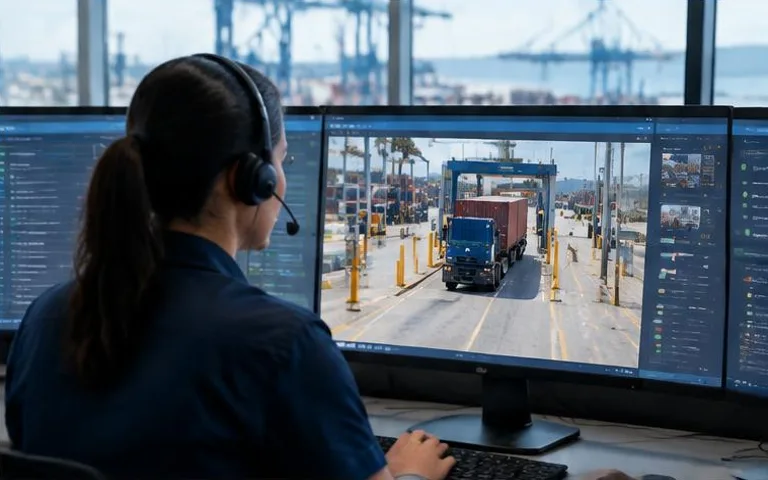
Daily Exception Checklist
Operational container management requires constant tracking of critical milestones. The logistics and procurement team should run through the following checklist daily:
Criteria for post-process technical disputes:
Once the voyage file is closed and the container is returned, audit the carrier’s demurrage/detention invoice against the operational event logs. Verify whether calculations honored the negotiated free time, the actual return date on the equipment interchange receipt, and any periods when the carrier’s designated depot was closed or lacked capacity to receive equipment.
Dispute discrepancies objectively and with documentary evidence through formal customer service channels, keeping copies of ticket IDs, emails, and terminal system screenshots. Commercial discussions and alignment with partners do not replace specialized legal review when significant disputes arise over invoiced amounts.
Frequently Asked Questions
Does free time include port storage? Only if specifically negotiated and expressly agreed upon in the terms; do not assume equivalence. Storage compensates the terminal for physical space, whereas carrier-granted free time covers only equipment usage.
Does customs clearance stop detention? Not necessarily. The obligation to unpack the container and return the physical empty unit in sound condition to the authorized depot remains active until the equipment interchange receipt is issued.
Does ANTAQ set my commercial free time? Contractual timeframes cannot be inferred from a regulatory agency’s informational webpage. Commercial terms, allowable free days, and daily rates are governed by the contract of carriage and the carrier's standard terms and conditions. Review the specific transaction terms and seek expert guidance when needed.
What should be done if the carrier's appointed depot rejects the empty container? Immediately obtain formal proof of refusal, such as a denied booking confirmation, photos of yard queues, or written notification from the depot operator. Formally notify the shipping line and freight forwarder in writing on the same day, requesting an alternative drop-off location and the freezing of per diem accruals for the duration of the operational blockage.
Sources and Editorial Reference
Editorial reference: October 31, 2026. Operational conditions and regulations must be confirmed for each shipment.