

Household goods: one catalogue is not one import category
Separate materials, uses and target users before consolidating household goods into a shipment.
Strategic analysis by Jiuann Teng — editorial baseline: 10/31/2026. This is neither news nor confirmation of a regulatory change on this date. The decisions outlined below depend on the specific product, its intended use, and the actual operational setup. Reconfirm the applicable regulatory text before contracting and prior to shipment.

Dismantle the catalog before negotiating
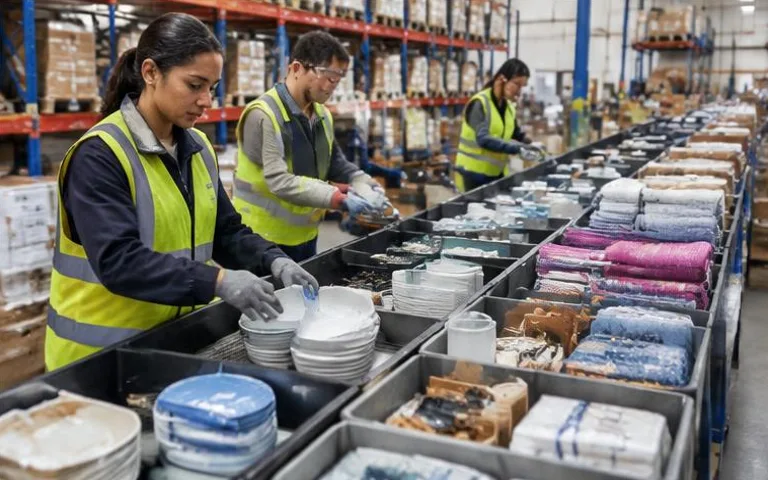
A housewares purchase often bundles food containers, decorative utensils, small appliances, and items with child appeal into a single purchase order. In a commercial environment, this assortment appears homogeneous because it supplies the same retail aisle or promotional campaign. At customs and before regulatory agencies, however, proximity on the shelf does not confer regulatory identity. Each item carries its own tariff classification, specific technical requirements, and distinct administrative treatments.
To prevent surprises at the border, dismantle the assortment before entering price negotiations with the exporter. Adopt a step-by-step approach:
- Grouping by material composition: separate pieces made of glass, ceramics, stainless steel, silicone, various plastics, and wood. Base composition defines technical barriers and rules governing contact with organic matter.
- Classification by intended use: distinguish purely decorative items from those designed for thermal handling, cutting, food storage, or heavy-duty cleaning.
- Mapping the power source: identify manual goods, battery-operated items, electrical plugs, or integrated electronic components.
- Precise definition of the target audience: verify whether the product features playful appeal, colors, or patterns that might lead inspectors to classify it as a toy or children's product.
The supplier must formally disclose the actual manufacturer, detailed composition, and recommended instructions for use, going beyond the simple commercial reference code in the catalog. For food contact materials, assess the sanitary regulations applicable to the material type and intended temperature conditions. This does not mean every houseware requires prior registration with Anvisa, but it does require verifying whether migration testing or specific declarations are mandatory.
For home appliances and other objects subject to mandatory oversight, consult the exact scope of conformity assessment with Inmetro. A test report issued abroad may serve as preliminary technical support, but it does not automatically substitute the requirements established by Brazilian conformity assessment programs.
A common mistake among commercial managers is negotiating the catalog en bloc, agreeing to shipping deadlines before confirming whether specific SKUs require prior import licensing. When a single item demands time-consuming inspections or supplementary test reports, the entire commercial shipment can be held up at origin or at the destination port.
Consolidation has an operational boundary
Consolidating dozens of houseware items into a single container reduces per-unit international freight costs and optimizes cargo cube utilization. However, physical consolidation also concentrates heterogeneous operational risks within the same cargo manifest. It is critical to assess whether items with high regulatory complexity should share a bill of lading with standard-clearance merchandise.
Physically segregating cargo within a bonded facility incurs handling, specialized warehousing, and segregation costs that often negate the freight savings gained through consolidation. Never promise executive management or clients that pulling a pending box will permit the immediate release of the remaining cargo. Evaluate the documentation structure, import declaration model, and operational specifics well before authorizing pickup at the exporter's warehouse.
Physical protection of the assortment demands equal technical rigor. In houseware shipments, fragile items frequently travel alongside dense, bulky cargo. Establish practical packaging and strength tests tailored to the sea or air transit route:
- Drop and stack testing: ensure master cartons can withstand the weight of the cargo column during transit at sea.
- Material segregation: ceramics and glass require reinforced internal dividers and specialized cushioning to prevent piece-to-piece friction.
- Legible external labeling: each carton must bear standardized labels with product code, Portuguese description, and stacking direction markings.
Throughout clearance, transit, and receiving, importers can rely on integrated service providers. Execution is supported by specialized operational partners, such as a network of over ten partner trading companies, partner customs brokers with more than twenty-five years of industry experience, partner warehousing operators in the Port of Santos region, and partner multimodal distribution companies. The manager's role is to coordinate these partners so that handling and cubic optimization specifications are preserved from port to final dock.
Calculate true landed cost based on sellable units that arrive undamaged at the warehouse—factoring in breakage, missing lids or accessories, and defect returns—rather than simply computing the nominal value per received package.
Assortment approval checklist
Implement a structured procedure to validate each item before issuing an international purchase order. The following checklist outlines minimum verification requirements:
For each analyzed SKU, formalize one of three decisions:
A smaller commercial rollout with a lean product mix and consistent documentation protects corporate cash flow far more effectively than an expansive catalog burdened with customs contingencies.
Turn the quotation into a financial decision
Financial analysis of a housewares import must not stop at converting the supplier's unit price at the current foreign exchange rate. The relevant metric for the business is the total landed cost to usable inventory. This calculation encompasses the merchandise at origin, international freight, insurance premium, applicable customs duties and taxes, port terminal tariffs, terminal handling charges, warehousing, customs brokerage fees, domestic road freight, and the cost of tied-up working capital.
Distinguish fixed contractual fees from operational estimates. Be wary of excessively brief freight or forwarding quotes: a few-line quote often omits destination local charges, port handling fees, or demurrage and extended storage costs. Demand a detailed, written breakdown of all potential charges in advance.
To substantiate executive decision-making, model the import across three practical scenarios:
- Planned scenario: customs clearance within the average timeframe, no parameterization for prolonged physical inspection, and minimal mechanical damage rates.
- Logistical delay scenario: documentation holds, requests for technical clarification, or inspection backlogs at the terminal, driving up daily container demurrage and port storage fees.
- Partial rejection scenario: specific SKUs detained due to regulatory or sanitary non-compliance, requiring re-exportation or supervised destruction of the cited items.
Avoid assigning subjective probabilities to these scenarios. Evaluate whether corporate cash flow remains resilient and stable even if an adverse scenario materializes. A theoretical margin calculated solely on an ideal scenario can evaporate entirely if a container spends a few extra days detained in a primary customs zone.
Governance to authorize and learn
Managing multi-portfolio imports requires a well-defined responsibility assignment matrix. Clearly establish who holds the authority to approve product specifications, tariff classification (NCM), overseas payments, and final shipment authorization (green light). Prior to executing international wire transfers, verify beneficiary banking details via an independent communication channel to mitigate corporate fraud.
Cross-reference the commercial invoice, packing list, and bill of lading against technical spec sheets registered in the system. Consult the Receita Federal Customs Manual to guide the steps of import clearance and leverage Siscomex tools to confirm the current administrative treatment for each NCM code. Customs procedures change; never assume that past import history automatically authorizes current order workflows.
Following physical delivery at the distribution center, carry out post-shipment reconciliation. Compare budgeted costs against actual settled costs, formally log mechanical damages, broken units, or labeling discrepancies, and determine the root cause of every inconsistency. This diagnosis must feed directly into supply contracts for the next procurement cycle.
Governance also directs the interface with service providers. The role of specialized advisory services is to coordinate regulatory intelligence, design operational flows, and audit processes performed by contracted partners, without implying direct ownership of warehouses, vessels, ground fleets, or bonded facilities.
Frequently asked questions
Do all culinary housewares require prior approval from Anvisa?
No. Sanitary oversight applies to products based on their composition, the risk of toxic substance migration into food, and their intended use. Only items governed by specific food contact regulations require prior regulatory procedures or material conformity declarations. Each case must be evaluated individually.
What happens if only one SKU in a consolidated container is held by customs?
Identifying irregularities or requesting clarification on a specific item typically halts clearance of the entire Import Declaration. While operational options like consignment splitting or segregation in a bonded facility exist, they are bureaucratic, costly, and contingent upon customs approval, generating additional storage expenses for the entire cargo.
Are technical test reports and certificates issued in the country of origin sufficient for national inspection?
Not always. International lab reports provide valuable evidence of product safety and composition, but they must align with analytical methods, standards, and acceptance criteria set by Brazilian regulatory authorities. If the conformity assessment program mandates certification under the Brazilian system, supplementary testing at accredited laboratories will be required.
Why might a product designed as decorative be inspected as a toy?
Customs authorities and regulatory agencies evaluate the intrinsic function, dimensions, colors, associated characters, and visual appeal of the item. If a piece possesses attractive features that encourage handling by children, it may be reclassified as a toy, immediately subjecting it to mandatory child safety requirements and certification.
Sources and scope of the analysis
Public sources consulted on 10/31/2026. Guidance pages do not substitute normative acts or case-specific review. Historical references identified below are not presented as current events.