

Metal cookware: certification, registration and food-contact safety
Separate Inmetro requirements from food-contact obligations and check the differences between pressure cookers and other cookware before approving a SKU.
Start with the actual cookware, not the catalogue
A coated aluminium frying pan, a stainless-steel saucepan and a pressure cooker should not automatically receive the same documentation workflow. First identify function, construction, materials, capacity and intended use. “Kitchen utensil” does not establish whether an item falls within the metal cookware regulation or which food-contact requirements apply to its surfaces. This specialist guide complements the household goods hub, rather than replacing its wider SKU matrix.
Request drawings, photographs, a materials list and instructions before ordering. Identify the body, lid, handles, fixings, coatings and parts that may touch food. Record the actual manufacturer and factory code, not just the distributor’s brand. Break sets down into individual pieces: selling products as one kit does not demonstrate a common regulatory assessment. The approved specification becomes the reference for comparing the sample, certificate, shipment and commercial listing throughout the purchasing process.

Read the underlying regulation together with its amendments
Inmetro Ordinance 499/2021 provides the consolidated regulatory base, but must not be read alone. The official register identifies subsequent amendments, including 167/2025 and 555/2026. The former updates requirements and references, including Anvisa RDC 854/2024. The latter distinguishes pressure cookers from other cookware regarding registration, conformity identification and import controls. An FAQ written before that amendment cannot settle the distinction for a current operation. 1
Read the 2026 amendment before commissioning the compliance process. Do not confuse an exemption from registration for certain cookware with a general exemption from certification or safety obligations. Likewise, do not reuse identical marking artwork and an identical import-approval workflow for pressure and non-pressure products. The responsible specialist should compare the item with the updated text, check the applicable provisions and document the conclusion. This guidance does not turn every metal kitchen object into a certified product. 2
Product safety and food contact are separate layers
Certification through a body accredited for the relevant scope addresses the applicable conformity programme; it is not a universal sanitary approval. Food-contact assessment depends on actual materials and conditions of use. A requirement for a metal cannot automatically be transferred to a polymer coating, decorative paint or elastomeric component. The 2025 amendment belongs in the technical reading of these requirements, rather than being treated as an optional reference. 3
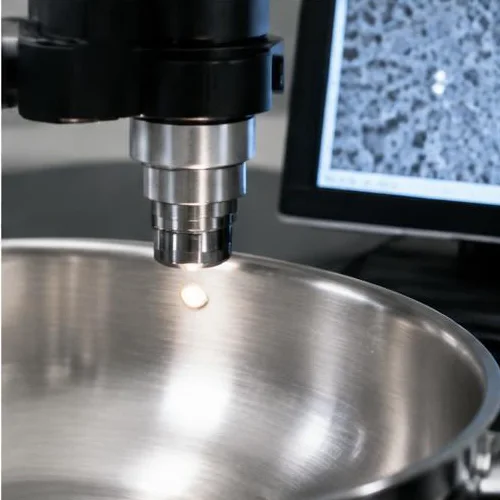
Build a contact map covering the inside surface, edges, lid, any seal and other relevant parts. Record temperature, duration, intended foods and the manufacturer’s restrictions. These details guide the selection of applicable rules and tests; they are not one statutory list for all cookware. “Food grade”, “free from substance X” and an overseas report without sample identification do not, by themselves, demonstrate Brazilian compliance. Require a connection between the formulation, tested article and purchased goods, including any limitations in the report.
Build evidence that follows the family and model
Confirm grouping rules and the applicable certification model with the Product Certification Body, or OCP. A seller’s commercial family is not necessarily a regulatory family. Different materials, coatings or construction features may require further assessment. Obtain the complete certificate and schedules; identify the holder, manufacturing site, brands and covered models, and verify status and scope. Finding the factory’s name on an unrelated certificate is not sufficient evidence for the order being placed.
For food-contact aspects, request relevant composition information, technical declarations and reports suited to the intended use. Check sample identification, method, laboratory, dates and conclusion. Do not impose testing of every shipment as a universal legal rule without a specific basis: it may instead be an additional contractual control, clearly separated from statutory obligations. Anvisa’s questions and answers help organise food-contact enquiries, but do not replace current legislation or necessarily incorporate changes made after the document’s edition. 4
Finalise markings, documents and the operation before shipment
Approve final packaging artwork and instructions only after confirming scope and applicable requirements. Compare codes, capacity, materials and supplier identification against the dossier. Check updated registration and conformity-identification rules separately for pressure and non-pressure cookware. Do not display a number belonging to another family or present approval of one sample as approval of an entire catalogue. Retain the approved artwork and photographs of the goods actually packed for shipment.
Administrative treatment requires its own operation-specific check. A regulatory amendment does not justify assuming that every tariff code is free of controls or that an old procedure remains suitable. Coordinate the technical assessment with the customs representative and consult the licensing and LPCO guide. Ensure the invoice and packing list reflect actual models and quantities. The import documents guide explains reconciliation, but commercial paperwork cannot replace the underlying technical evidence or resolve an uncovered model.
Approval and change-control checklist
Assign an owner and version to each approval. Purchasing should not accept a coating change merely because its colour stays the same; quality should not release a different factory merely because the brand is familiar. Require change notification in the contract and assessment before production. On arrival, verify identity, packaging and traceability before making stock available. Visual inspection does not replace testing, but can reveal that the supporting documents describe a different product from the one delivered.
Hypothetical example: one set, two decisions
An importer negotiates a set containing a coated frying pan and a pressure cooker. The supplier sends one certificate, saying it “covers everything”. The team requests the schedules, compares product codes and finds that the document covers only the frying-pan family. Purchasing the pressure cooker remains conditional on its specific evidence; association in a commercial set does not authorise release of the second item.
Meanwhile, the supplier proposes another coating to accelerate delivery. The team requests composition information and assessment of relevant reports before accepting it. It also revisits each product type’s registration, identification and import workflow under the 2026 amendment. This is a hypothetical example, not a finding against any technology or a promised certification timetable. Its practical value is preventing common packaging from concealing two separate regulatory decisions and an uncontrolled design change.
FAQ and next step
Does every pan require the same registration? No. The updated reading must distinguish pressure and non-pressure products; do not extend that distinction into a general certification exemption.
Does Inmetro certification eliminate food-contact assessment? No. Materials and conditions of contact still require their own review.
Is an overseas report useless? Not necessarily. Acceptance depends on the requirement, programme and product identification, not a seller’s assertion of equivalence.
Can the coating change without a dossier review? Do not assume so. Refer the change to the technical specialist and the OCP where relevant.
Send specifications, composition, photographs, certificates and schedules, model codes and intended use through our contact page. The aim is to identify evidence and outstanding issues per SKU before commercial commitment, not promise automatic import approval or retrospective regularisation.