

Importing fabrics: customs descriptions under ADE Coana 22
Turn fabric structure, composition, weave and measurements into item descriptions while separating ADE requirements, NVE and Duimp attributes.
Identify the fabric, not just its sales name
“Oxford,” “suede” and “premium fabric” may help sell a collection, but they do not adequately identify goods for Brazilian customs. A description should allow the actual product to be recognized and its tariff classification checked. That requires verifiable characteristics tied to the imported article and variant, rather than marketing adjectives. A photograph records appearance; it cannot establish composition, construction or yarn count.
This guide follows fabric data from the technical sheet into the declaration. The textile hub covers batch approval and purchasing specifications; the yarn guide examines the input material. Contractual tolerances, inspections and packaging controls remain useful, but inclusion in a purchasing checklist does not make them universal legal obligations.
ADE Coana 22: verified status and limited scope
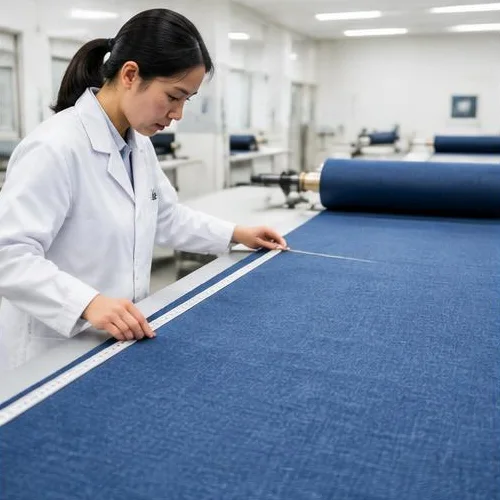
The correct instrument is Ato Declaratório Executivo Coana No. 22, dated 23 September 2005, not “Portaria 22.” Receita Federal's official database marks it as in force. Article 1 addresses imported or exported yarns and fabrics classified in NCM Chapters 50–60. Its sole paragraph states: “A descrição da mercadoria aplica-se ao item, dentro de cada adição da declaração de importação ou de exportação.” In other words, description applies to each item within each declaration addition. Official act.
A collection-wide statement at the top of an invoice is therefore insufficient as an item description. Nor should this act automatically be extended to all clothing or made-up articles. Product identity and nomenclature notes determine the boundaries. Article 2 addresses incomplete descriptions; assess consequences against applicable legislation rather than assuming every statutory penalty reference from 2005 remains unchanged.
An editorial discrepancy must remain visible: Receita labels the commencement clause Article 5, while a secondary reproduction calls it Article 3. The express clause says thirty days after publication, although the database commencement metadata indicates publication itself. Without the original gazette scan, the printed numbering cannot be settled by assumption.
The actual fabric fields in the annex
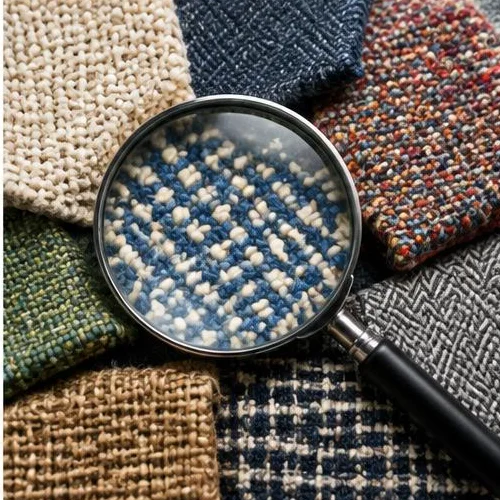
The annex separates structure into woven fabric, circular or flat weft knitting, warp knitting, pile fabric, nonwoven, specified special fabrics and other identified constructions. “Twill” is not an adequate structure answer: it describes weave. For knitted or special constructions, record the actual construction and explain fields that do not technically correspond, instead of inventing a woven-fabric weave.
For composition, the Portuguese text requires “a composição percentual do tecido, mencionando a % em peso, de cada um dos seus constituintes”: the percentage by weight of each constituent. Identify the actual fibers, distinguishing natural, artificial and synthetic materials. Viscose and polyester are not interchangeable simply because both involve industrial production. Check that the percentages for the described product total 100%, without inventing a distribution to conceal rounding discrepancies.
The annex also lists weave—plain, twill, satin or another specified weave—and processing: unprocessed, dyed, bleached, yarns of different colors, printed or other specified processing. Additional fields include “Título dos fios (em Dtex),” “Largura do tecido” and “Gramatura do tecido (g/m2)”: yarn count in Dtex, fabric width and mass per area. These are actual official annex fields, not an invented commercial checklist.
Identify separate warp and weft counts where they differ. State width with its unit and distinguish total width from contractual usable width. Fabric mass per area is not the roll's net weight. Investigate additional relevant finishing, particularly coatings, because it may affect classification.
Turn supplier answers into defensible classification
Send a questionnaire for each reference, with defined fields, units and an accountable respondent. Request mass composition, construction, weave, processing, yarn counts, width and mass per area. Link the technical sheet to its manufacturer, revision, variant and relevant batch. Sales catalogues and labels offer comparison points, but neither independently proves all these characteristics.
If the factory answers only “poly blend,” return the unresolved question. If it supplies two counts without explaining which yarn each represents, request clarification. Do not borrow values from a visually similar product or present a contractual tolerance as a measured result. Where the sheet conflicts materially with technical evidence, obtain an explanation or testing proportionate to the uncertainty before finalizing the description.
A defensible NCM classification considers classification rules, legal notes and actual characteristics. An exporter's proposed code is a starting hypothesis, not Brazilian approval. Changes in composition, coating or construction require reassessment; a new collection name alone does not demonstrate a technical change.
DI, NVE and Duimp are separate data obligations
Under the DI process, detailed description is distinct from the NVE field. Portaria Coana No. 159 of 5 August 2024 governs complementary NCM attributes and specifications reported as NVE for goods covered by its annex. Published on 16 August, it expressly repealed Portaria 81/2022 through Article 4, effective 14 November 2024 under Article 5 and the official record. Do not present 81/2022 as current authority. Portaria 159.
For Duimp, consult the attributes linked to the relevant NCM in production and their conditions. Siscomex defines these as structured information by NCM code in the Catalogue, Duimp and LPCO modules, and explains that attributes will replace NVE. This does not establish an automatic mapping between the two systems' codes or answers. 3.
The Product Catalogue supports reuse but requires version control. Official FAQs explain registration and warn that the system evolves. A screen without validation errors does not certify composition or classification. Consult the official FAQ, October 2024 reference alongside the Duimp guide.
A hypothetical description, worked through
Assume a verified technical sheet for fictional article TX-204: uncoated woven fabric, 65% polyester and 35% viscose by mass, twill weave, piece-dyed, warp yarn 167 Dtex, weft yarn 200 Dtex, total width 1.50 m and mass per area 180 g/m².
A possible description reads: “Woven fabric, article TX-204; composition by mass: polyester 65%, viscose 35%; twill weave; piece-dyed; yarn count: warp 167 Dtex, weft 200 Dtex; total width 1.50 m; mass per area 180 g/m²; uncoated.” Every number is invented solely to illustrate drafting. This is neither a reusable specification nor an NCM recommendation.
The team must still validate classification and complete the structured fields actually required. If contractual usable width is 1.47 m, identify it separately rather than silently substituting it for total width. A differently finished variant requires its own description review.
Pre-submission checklist
Frequently asked questions and next steps
Does the label replace the description? No. Commercial identification and labeling requirements serve their own purposes; neither removes customs identification duties.
Can missing values come from an earlier sample? Only after establishing technical correspondence with the current product. Record the gap and request verifiable information instead of guessing.
Does every fabric have identical Duimp attributes? No. Check the NCM, applicable conditions and production version for the operation.
To organize document review while keeping legal requirements separate from purchasing standards, contact us. Assessment depends on the product and does not promise a particular classification, exemption or release.