

Imported textiles: approve the batch, not just the sample
Composition, labeling and batch consistency should guide textile purchases before shipment.
Strategic analysis by Jiuann Teng — editorial reference: October 31, 2026. This is neither news nor confirmation of a regulatory change on this date. The decisions below depend on the specific product, intended purpose, and actual operation. Reconfirm the applicable regulatory text before contracting and prior to shipment.

The Unit of Decision Is the Specified Article
A collection may bring together visually similar fabrics that feature different compositions, constructions, and intended uses. For an importer, buying solely from a photograph or an initial swatch shifts technical risk directly to the cutting table, the sewing line, or the retail floor. Approval of a development sample merely confirms the mill's theoretical capability. The commercial production run, however, is what truly determines the industrial cost and customs compliance of the operation.
Full-scale production involves operational variables that do not appear in small counter swatches. Yarn lot changes, loom tension variations, thermal fluctuations during dyeing, and instability in chemical finishing all alter a material's physical behavior. Consequently, the purchasing company must treat each article independently and systematically.
Establish a formal technical data sheet for each item before confirming any purchase order. The document must detail:
- Exact composition of fibers and filaments;
- Nominal fabric weight (GSM) and allowable variation limits;
- Total width and usable cuttable width;
- Warp and weft structure or knit type;
- Type of dyeing, printing, and applied finishes;
- Tolerance ranges for shrinkage and skewing after washing;
- Industrial or commercial destination of the product.
Clearly distinguish between rolled fabric, finished garments, and technical textiles. The commercial designation used in a sales catalog neither resolves nor guides tariff classification under the Mercosur Common Nomenclature (NCM). Minor additions of synthetic fibers to a natural base can alter duty rates and regulatory requirements.
Request samples pulled directly from the start of the production run for the contracted batch. Define laboratory testing proportional to the intended use: dimensional stability, colorfastness to rubbing and washing, seam slippage and tear resistance, and thermal performance. Do not treat these commercial tests as a universal obligation, as each market segment demands distinct priorities.
For fabrics intended for workwear or corporate shirting, shade consistency and colorfastness across successive deliveries carry far more weight than an immediate expansion of the swatch book's color range. Always compare the cost per effectively usable meter or kilogram. A roll with recurring selvage defects or excessive shrinkage costs more per cut piece than a fabric with a higher unit price and proven stability.
A Label Is Not a License
Official Inmetro guidance distinguishes the absence of prior non-automatic import licensing for certain textile products from the strict obligation of compliant labeling for sale within Brazilian territory. This conceptual distinction often causes serious mistakes among inattentive procurement teams. An exemption from prior approval in Siscomex does not authorize customs clearance for goods with incomplete data or those failing to comply with Brazilian technical standards.
This does not eliminate the need to verify the administrative treatment of the transaction or investigate specific requirements for articles performing special functions, such as thermal protection, chemical barrier, or safety apparel. Review applicable textile regulations, mandatory content in Portuguese, and legal liability for product identification before authorizing label production or printing overseas.
Common labeling errors that halt shipments during customs clearance include:
- Using commercial fiber names instead of the official generic designation;
- Omitting the domestic importing company's tax ID (CNPJ);
- Listing composition percentages that diverge from laboratory test reports;
- Omitting clear care symbols or washing instructions;
- Providing an incomplete country of origin designation for the textile product.
A declaration of composition from a foreign manufacturer does not prove compliance to Brazilian inspection authorities. During physical customs inspection, officials may draw samples for laboratory testing. If the analysis reveals discrepancies in fiber composition, the import is subject to fines, mandatory document rectification, or re-labeling requirements under customs control.
Checklist and Purchasing Conditions
Managing international textile procurement requires a formal validation workflow that ties technical specifications to commercial contractual clauses. Importers should structure this routine into four sequential stages:
To coordinate internal departments, use the following responsibility checklist:
Release the commercial purchase order and financial advances only after these areas are fully aligned. A frequent negotiating mistake is executing contracts without establishing objective rejection criteria. If tolerance limits are not explicitly stated in the pro forma invoice or purchase agreement, refusing a non-compliant shipment becomes legally precarious.
If the verified actual composition deviates from what was declared, immediately halt batch acceptance. Evaluate tax and customs implications, the need for an amended declaration, and the impact on the production schedule. For replenishment orders, preserve the history and traceability of the original article. Quietly altering the yarn or fabric density to maintain unit pricing undermines factory yield and destroys the quality standard established with the end customer.
Turn the Quote into a Financial Decision
Executive decision-making must evaluate the total cost of goods delivered to available inventory, not just the ex-factory unit price overseas. Landed cost calculations encompass merchandise value, pre-carriage to the port of loading, international freight, insurance premiums, applicable customs duties and taxes, storage tariffs, port terminal fees, customs clearance expenses, domestic inland freight, and the cost of capital tied up in inventory.
Separate contracted, fixed values from those based on third-party estimates. A quote with fewer itemized lines is not necessarily the most cost-effective option; it may simply conceal handling and terminal charges that surface upon arrival. Always demand in writing the full scope of services, liability exclusions, and container demurrage and detention fee schedules.
Model financial feasibility based on three operational scenarios:
- Base scenario: customs clearance and cargo movement within planned average timelines.
- Logistics delay scenario: detention for physical and documentary customs inspection, generating additional port storage and container detention/demurrage fees.
- Non-compliant batch scenario: detection of damage, internal moisture, or specification deviations requiring cargo segregation and rework.
Do not assign subjective probabilities to these scenarios without concrete historical data from prior operations. Calculate the financial impact of each scenario on cash flow, working capital opportunity cost, and the commercial damage of failing to fulfill order books on time. The operation should only be authorized if the business maintains adequate liquidity and a viable operating margin even under customs detention or rework scenarios.
Governance for Authorization and Continuous Learning
Risk mitigation in textile importing depends on clear corporate governance thresholds. Formally define who is responsible for approving technical specifications, who signs off on tariff classification, who authorizes overseas wire transfers, and who grants final acceptance for shipment at origin.
Establish strict banking security protocols. Confirm payment details through independent communication channels prior to any wire transfer. Thoroughly cross-check the commercial invoice, packing list, and technical roll descriptions against issued shipping instructions.
Executing these stages efficiently relies on specialized service providers. Supply chain coordination can draw on partner networks featuring over 10 partner trading companies, customs broker partners with more than 25 years of professional experience, partner warehousing solutions at the Port of Santos, and multimodal distribution frameworks serving production facilities. The integration of these structures helps alleviate customs bottlenecks and accelerates domestic transit.
Consult the Brazilian Federal Revenue's Customs Manual to understand import clearance requirements, and use the Siscomex system to verify current administrative treatment for the product's tariff code. Never assume that rules applied to past shipments remain identical, or that similar fabrics share the same documentation requirements.
Following final delivery, audit actual landed costs against the original budget. Log transit damage, yardage discrepancies, or dyeing inconsistencies by batch and supplier. Use this database to calibrate future negotiations. The role of strategic advisory is to structure processes, organize information, and coordinate contracted providers—without owning physical port terminals, bonded warehouses, or transportation fleets.
Frequently Asked Questions
Why does development sample approval not eliminate commercial batch risk?
A development sample, often produced on sample looms or in short manual yardages, reflects ideal, tightly controlled conditions. Commercial bulk manufacturing runs on continuous industrial machinery, uses different dye lots, and processes raw materials that can exhibit slight variations in composition, tension, and twist. Approving the production lot prior to dispatch validates the actual goods heading to the cutting floor.
What should be done when imported fabric shows color deviation from the approved master standard?
Acceptance depends on the technical tolerance window established in the purchase agreement. If the deviation exceeds agreed-upon limits, the buyer should stop shipment at origin based on the inspection report. If the lot has already arrived, segregate the material, assess visual impact on finished garments, and contact the supplier to negotiate financial compensation or product replacement.
What is the most common error in tariff classification for imported textiles?
The most frequent mistake is classifying an item based solely on its trade name or intended commercial use. Under the Mercosur Common Nomenclature (NCM), classification requires precise verification of fiber percentage weights, fabric weight (GSM), weaving or knitting construction, and any plastic or chemical coatings. Slight variations in fiber proportions can alter import duty rates and applicable regulatory controls.
How can fabric be protected against damage during international ocean transit?
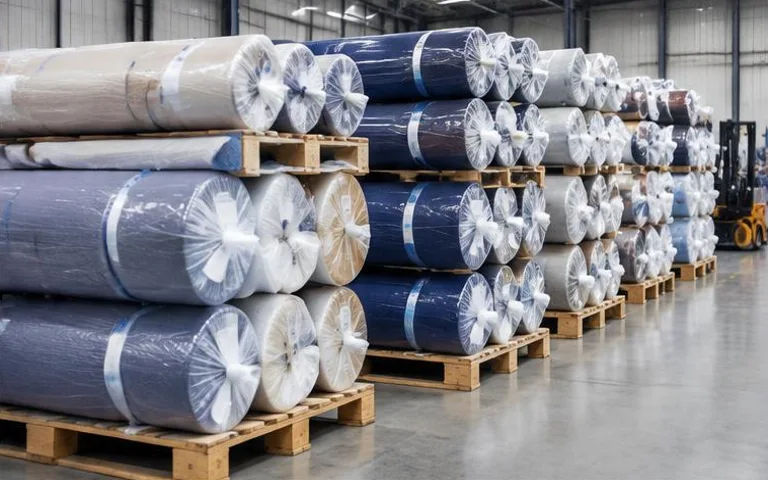
Purchase specifications must mandate strict primary and secondary packaging requirements. Fabric rolls should be wound onto heavy-duty rigid cardboard cores, wrapped in sealed waterproof plastic film, and stowed in clean, dry containers. Utilizing desiccant bags and securing proper container cargo lashing prevents damage from internal moisture condensation and transit abrasion.
Sources and Scope of Analysis
Public sources consulted on October 31, 2026. Informational guidance pages do not replace official regulatory statutes and case-specific operational review. Historical references noted below are not presented as current events.
Customs descriptions: corrected scope and current references
Commercial batch approval does not replace customs identification. The correct instrument is ADE Coana No. 22 of 23 September 2005, marked in force in Receita's official database. It covers imported or exported yarns and fabrics classified in NCM Chapters 50–60, with description by item within each addition. It is not a universal rule for all clothing or made-up articles.
The annex requires specific characteristics. For fabric: structure, percentage composition by mass, weave, processing, yarn counts in Dtex, width and mass per area. For yarn, it also addresses process, construction, packaging, turns per meter and tenacity where applicable. Do not estimate missing facts or treat commercial labels as substitutes for technical sheets.
Under DI, NVE is a separate obligation. Portaria Coana 159/2024 expressly repealed 81/2022, effective 14 November 2024, for the complementary-information regime covered by its annex. For Duimp, consult the official NCM-linked attributes; do not automatically copy NVE codes.
For implementation, read the fabric-description guide and yarn technical-sheet guide. They disclose the historical numbering anomaly in the ADE commencement clause without confusing it with current status. To review documents and operational responsibilities, contact us.