

Santos warehousing: turn dwell time into an operating plan
Plan Santos warehousing around location, capacity and stock turnover. Distinguish terminal storage, bonded facilities and cleared inventory before choosing.
Inventory Location Changes the Operation
Storing cargo in Santos can connect offloading directly to distribution, but proximity to the port alone is not enough to justify the choice. The facility must match the cargo's customs status, product specifications, and required market fulfillment pace. An available warehouse is not, by default, authorized for every type of operation.
The decision must clarify why the goods will remain there. It could be an operational hold, a customs clearance phase, or strategic inventory staging. Conflating these purposes makes it difficult to measure costs, liabilities, and acceptable dwell times.
Many companies view coastal storage as an involuntary consequence of customs or documentation bottlenecks. However, when planned intentionally, facility space in the Baixada Santista region ceases to be a cost-retention trap and begins functioning as a strategic consolidation or deconsolidation hub.
To determine whether inventory should remain in Santos or move inland up the plateau immediately after clearance, evaluate the following decision criteria:
- Final product destination: If the cargo serves multiple states or inland customers, breaking bulk versus transferring full truckloads involves significantly different road freight costs.
- Customer delivery deadlines: Assess whether transit times from the Baixada Santista meet agreed commercial service level agreements (SLAs).
- Opportunity cost of space: Compare square-meter rates or daily pallet charges at off-dock facilities with storage costs at distribution centers located near major consumer markets.
- Weather and traffic risks: Account for uphill highway restrictions, road closures, and peak congestion windows on key access routes.
The most common mistake at this stage is keeping cargo stored in Santos purely out of operational inertia, without assessing whether the location actually aligns with the company’s sales and distribution goals.
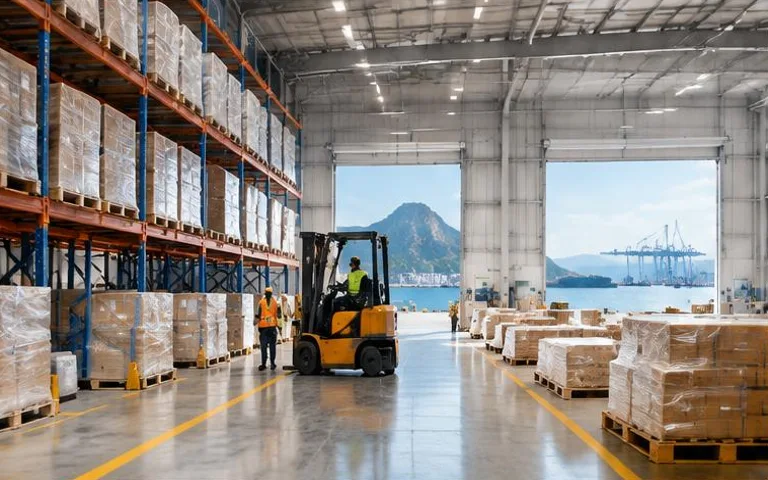
Distinguish Between Terminals, Bonded Facilities, and Cleared Inventory
Storage tied directly to marine terminals operates under its own specific terms. Bonded facilities follow strict regulatory requirements and must not be confused with general warehouses. Cleared, nationalized goods can form part of a commercial inventory strategy, subject to the tax and operational rules governing freight movement.
Cargo under customs control can only remain in bonded facilities authorized by the Federal Revenue Service (Receita Federal), whether primary-zone port terminals or secondary-zone facilities such as dry ports and integrated logistics centers. Once customs-cleared, goods can move to general warehouses, distribution centers, or corporate branches with active state tax registrations.
Any transfer must be validated for documentation, permits, costs, and liability. Moving cargo to another address should never be treated as an automatic solution for tax or regulatory challenges. The operational benefit must be clearly demonstrated after accounting for additional handling and transport costs.
Transfers under bonded customs transit regimes require financial guarantees, specific declaration filings, and licensed bonded carriers. Partnering with seasoned customs brokers with over 25 years of industry experience ensures that each regulatory requirement is met without triggering unexpected container demurrage or tax penalties.
Request quotes that explicitly outline billing units, storage periods, minimum charges, receiving, picking, dispatch, and ancillary services. An apparently low storage rate can quickly be eclipsed by handling fees or an inefficient shipping frequency.
Typical cost components in warehousing contracts include:
- Base storage rate: Calculated by billing cycle, weight, volume, cargo value, or pallet count.
- Internal handling: Charges for container destuffing, receiving, inspection, put-away, and vehicle loading.
- Ancillary services: Official weighing, labeling, kitting, palletizing, stretch wrapping, and regulatory inspections.
- Vehicle detention: Charges incurred due to loading or unloading delays at the destination facility.
A recurring error is comparing only daily storage rates across operators while ignoring inbound and outbound handling fees. In high-turnover operations, handling fees can easily exceed daily storage costs.
Size Actual Operational Capacity
Verify vehicle access, receiving windows, unloading throughput, material handling equipment, and security measures. For sensitive products, evaluate temperature control, humidity, segregation, and traceability. Commercial capacity claims must be backed by evidence and verified against actual cargo needs.
A warehouse's technical capability must comply with sector-specific regulatory requirements. Chemicals, pharmaceuticals, cosmetics, and food products require operating licenses issued by specialized inspection agencies, alongside containment infrastructure or physical isolation.
Inventory tracking must monitor orders and production lots, not just aggregate counts. Establish clear procedures for discrepancies, damaged goods, returns, and cycle counts. If software integration is involved, define which milestones are logged and how data reconciliation will be handled.
To maintain physical and accounting control, structure an operational workflow with the following steps:
- Delivery scheduling: Formal alignment between carrier and warehouse defining arrival windows and vehicle specifications.
- Inbound inspection and check-in: Verification of container seals, packaging integrity, blind piece counts, and reconciliation with invoices or import declarations.
- System logging: Recording lot numbers, expiration dates, weight, and bin locations in the Warehouse Management System (WMS), with data mirrored for the client.
- Storage and maintenance: Cycle counts to maintain inventory accuracy alongside ongoing monitoring of contracted environmental conditions.
- Picking and dispatch: Outbound inspection, transport documentation issuance, and gate-out timestamp recording.
A logistics network with access to warehousing in Santos can assemble flexible operational alternatives without owning the physical assets. Working collaboratively with storage partners in Santos, over 10 partner trading companies, and dedicated multimodal carriers allows companies to scale warehousing capacity to match seasonal demand shifts.
When contracting, clearly specify the operator, facility address, operational scope, insurance terms, and liabilities. Coordination capability does not equate to guaranteed space availability at all times. Request copies of insurance policies covering theft, fire, and cargo damage, verifying coverage limits and risk management plan requirements.
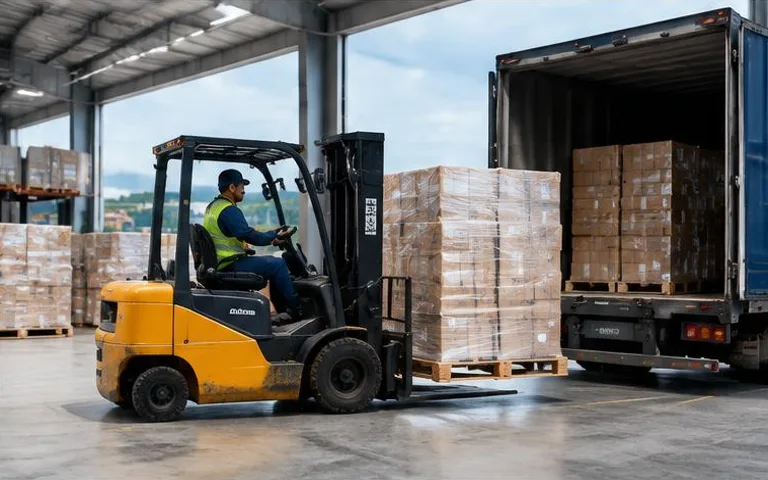
Checklist for Contracting and Operations
To turn warehousing into a reliable, well-planned phase, use this structured checklist before moving any shipment:
Documentation and tax phase:
Contractual and pricing phase:
Fulfillment and distribution phase:
Track dwell time by root cause: documentation, inspection, appointment scheduling, or commercial hold. This classification highlights whether delays originate in customs clearance, warehouse operations, or sales planning. A single aggregate average can conceal shipments held up for fundamentally different reasons.
When analyzing yard or dock dwell times, separate delays caused by regulatory agency physical inspections from those caused by unissued tax payment slips. This distinction prevents internal administrative oversights from being mistakenly blamed on the logistics service provider.
Integrated management between partner customs brokers and multimodal carriers allows teams to anticipate clearance and schedule pickups the moment cargo is released, eliminating avoidable dwell costs.
Frequently Asked Questions
Does proximity to the port guarantee lower costs? Not necessarily. Order frequency, handling fees, and secondary transport significantly alter the total cost. A cheap daily storage rate on the coast can easily be wiped out by the expense of partial, long-distance shipments to inland consumer markets.
Can any warehouse accept uncleared cargo? No. The operation must strictly comply with customs regulations and facility certifications. Cargo under customs control may only be stored in bonded facilities officially accredited by tax authorities.
When is it worth transferring cargo from a marine terminal to an off-dock facility? Transferring cargo makes sense when the anticipated timeline for inspection, clearance, or consolidation exceeds the marine terminal’s free time allowance, and secondary-zone rates offset drayage and transfer handling costs.
Does the port authority website list my operator's rates? It should not be used for that purpose. The port portal serves as an institutional reference; formal quotes must be obtained directly from operators. Commercial terms, free time, and ancillary services vary across private operators and individual contracts.
Sources and Editorial Reference
Editorial reference: October 31, 2026. Operational conditions and regulations must be confirmed for each individual operation.