

Coastal shipping in Brazil: design the complete distribution route
Assess Brazilian coastal shipping with collection, ports, inventory and delivery included. Compare road and air alternatives by the complete customer service.
The Coast Is Just One Leg, Not the Entire Delivery
Cabotage can be integrated into a distribution strategy between Brazilian regions, particularly when there is a predictable flow and adequate access to the ports involved. Its role is not to automatically replace trucking. In many network designs, road transport remains necessary at both ends, and competitiveness depends on seamless connections across all legs of the supply chain.
The country's economic geography concentrates industrial parks and consumer centers at varying distances from the coast. For executives seeking budget balance and predictability, coastal shipping offers an alternative with massive capacity. However, viewing the vessel as the complete solution leads to serious planning failures. Maritime transit must be treated as the intermediate link in a broader machine.
Start by mapping origin, final destination, order frequency, and customer inventory capacity. A route suited for scheduled replenishment may not meet the demands of an emergency delivery. The choice must be made by corridor and cargo profile, not out of an abstract preference for a transport mode.
Essential decision criteria for evaluating corridor viability include:
- Regularity of volume: cargo with continuous, predictable demand justifies the maritime transport cycle.
- Weight-to-cube ratio: denser products tend to make better use of the weight capacity of containers and vessels.
- Distance to terminals: the further the plant and end customer are from the docking ports, the greater the impact of road freight on the final bill.
- Receiver flexibility: customers operating within strict delivery windows may experience friction if the operation lacks a regional logistical buffer.
A proper assessment requires comparing the point-to-point road route against the sum of all legs in the cabotage journey. When the extended transit time can be absorbed by the supply chain without causing manufacturing or commercial disruptions, the coastal route gains strategic relevance.
Design the Door-to-Door Service
Include pick-up, transit to the port, gate-in, loading, ocean transit, discharge, gate-out, and final delivery. Verify weight limits, equipment, packaging, and access conditions. Also confirm who is responsible for each handoff and how schedule changes will be communicated.
Detailed design of a door-to-door route requires mapping essential sequential stages:
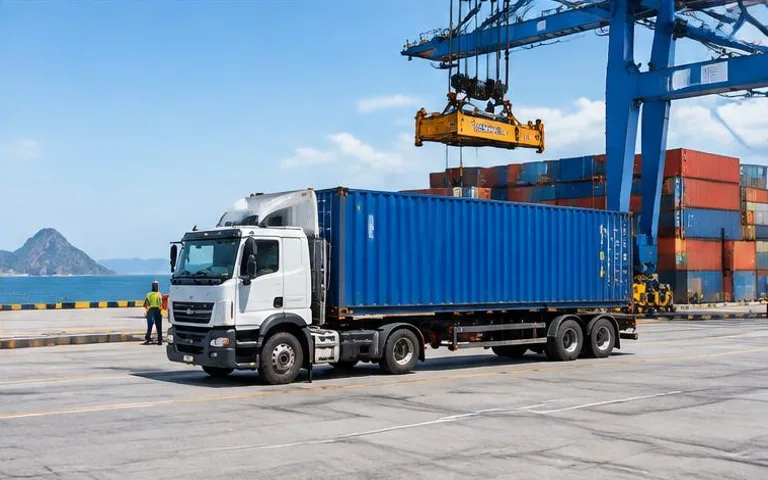
- First mile (pick-up): collection at the origin warehouse, weighing, cargo securing, and road transit to the port of loading.
- Port reception at origin: gate procedures, mandatory weighing, integrity inspection, and delivery within the carrier's cut-off window.
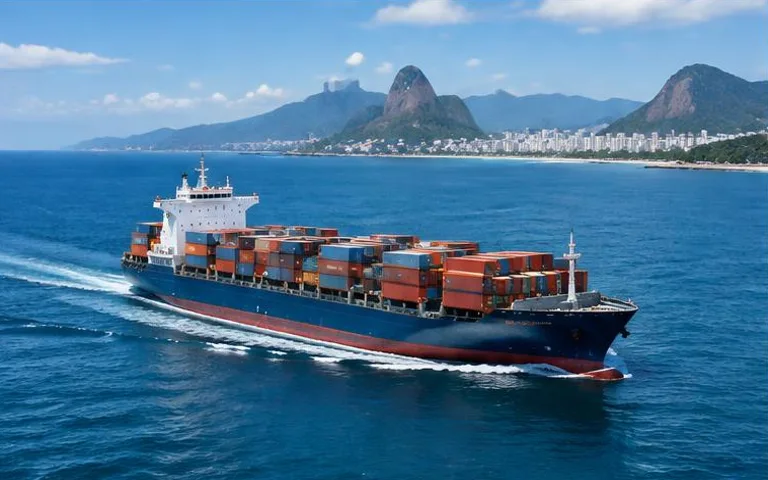
- Maritime leg: stowage, quayside handling, ocean transit, and berthing at the destination port.
- Discharge and transshipment: handling in the receiving yard, operational clearance, and transfer to road transport.
- Last mile (final delivery): road transport from the port to the recipient's distribution center or plant, complying with local traffic restrictions.
The ocean leg's freight rate does not represent the full cost. Add handling charges, port fees, land transport, insurance, and potential storage. Identify container costs where applicable, and do not automatically carry over terms from an international operation to domestic service.
The true cost breakdown must consider:
- Base ocean freight agreed upon with the coastal shipping line.
- Terminal handling charges at both the port of origin and the port of destination.
- Dedicated road freight for initial pick-up and final delivery legs.
- Free time allowances and potential demurrage or detention costs for containers and chassis.
- Additional storage in the event of a mismatch between vessel discharge and the recipient’s receiving capacity.
- Specific insurance coverage for multimodal domestic freight operations.
Tax and transport documentation must be validated for the contracted flow. The fact that the cargo is already nationalized does not eliminate domestic obligations. Specific taxes, benefits, or fiscal treatments require their own analysis; they should not be assumed based on the name of the transport mode.
Common mistakes at this stage include issuing transport documents disconnected from the cargo's physical reality, ignoring origin port delivery cut-offs, and assuming maritime equipment has the same internal dimensions as conventional road trailers. Every operational detail overlooked in the door-to-door design turns into unforeseen costs at the delivery point.
Frequency and Inventory Must Align
Compare available sailing schedules with consumption rates and receiving windows. Evaluate what happens if the cargo misses a sailing or if the customer requests an expedited delivery. Do not promise fixed transit times without contractual and operational backing. Estimates should account for dependencies that could alter cargo availability dates.
The cost of inventory in transit and at destination can tilt the comparison against trucking. Longer sailing times require higher volumes of working capital tied up in moving goods. To offset this, the manufacturing plant must size adequate safety stocks at regional distribution hubs.
When genuine urgency arises, a portion of the volume may require a domestic air freight solution under a separate budget. The most efficient strategy often combines modes—provided the exception does not become an invisible, recurring expense. Modern logistics balancing assigns base volumes to cabotage, uses trucking for gradual demand adjustments, and triggers air freight solely for critical contingencies.
Orchestrating this complexity relies on cooperation with specialized suppliers and service providers. A network capable of coordinating road distribution, coastal shipping, and domestic air freight allows these alternatives to be compared with operational precision. This is about the ability to coordinate providers, not about claiming a private fleet or unlimited service availability.
Under this governance model, partner-operated warehousing facilities in Santos provide vital support for consolidation, cross-docking, and transshipment buffers between the interior of São Paulo state and national maritime lanes. Likewise, working alongside partner customs brokers with more than 25 years of experience ensures compliance in managing documentation and clearances for cargo under special customs regimes or bonded warehousing. The synergy is completed through interaction with over 10 partner trading companies, expanding the ability to synchronize procurement, sales, and physical distribution flows without operational interruptions.
Checklist for Testing a Corridor
Setting up an experimental corridor is the safest way to validate assumptions without jeopardizing service levels for regular customers. Use the following guide to plan and audit the pilot project:
A pilot should include representative orders and account for extraordinary costs. If the operation looks cheap only because one end was left out of the calculation, the model is not yet ready for rollout.
Frequently Asked Questions
Does coastal shipping eliminate road transport?
Generally not in door-to-door operations. Since the vast majority of collection and delivery points are not located directly on port quays, trucking remains indispensable for covering the first and last miles.
Is it always cheaper?
No. The financial outcome depends on total distance, proximity to port terminals, volume moved, end-to-end handling expenses, and the cost of additional inventory held in transit.
How can the risk of delays in coastal shipping be mitigated?
Mitigation involves correctly sizing safety stock at the destination, proactively monitoring carrier vessel calls, and maintaining contingency trucking contracts for emergency volumes.
Does ANTAQ provide an off-the-shelf commercial solution?
Its institutional portal is an industry reference point, not a substitute for commercial quotes and contractual validation. Companies must consult logistics operators and ocean carriers to obtain commercial proposals and service level agreements.
Sources and Editorial Reference
Editorial reference: October 31, 2026. Operational conditions and regulations must be confirmed for each individual operation.