

Used machinery: licensing and assessment of Brazilian production
Build a used-equipment assessment without confusing domestic production, similarity review and company authorization.
Research updated on 2 November 2026. Editorial guidance, not a legal review or full certification of current law. Confirm the applicable text of Secex Ordinance 249/2023, amendments and operational procedure before making binding commitments.
Used machinery may offer affordable production capacity, but its purchase price does not answer the first regulatory question: under which legal hypothesis will the import be assessed? A statement that the equipment works is insufficient. Its condition, intended use and technical characteristics must support the selected route.
This article complements our heavy-machinery hub. It addresses used-goods licensing and assessment of Brazilian production, rather than lifting plans, installation logistics or industrial commissioning.
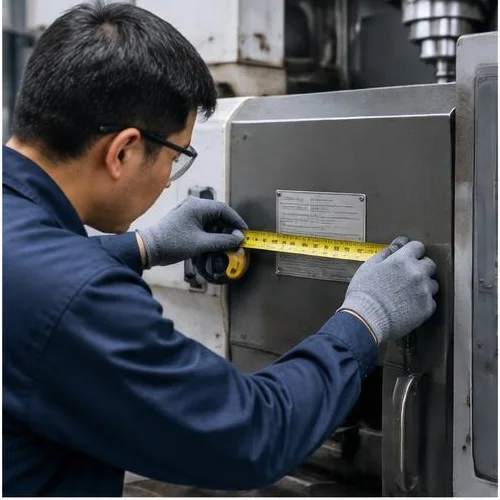
1. Establish the actual condition and import hypothesis
Describe the equipment's history accurately. New, used, rebuilt and refurbished are not interchangeable sales labels that can be selected to simplify an application. A mechanical overhaul or fresh paint does not by itself justify declaring an item new. Obtain evidence of its offered condition and involve engineering in the assessment.
The official used-material and similarity page directs importers to Secex Ordinance 249/2023 and the Operational Procedures Manual. Start there to identify the general rule, specific hypotheses and exemptions, instead of treating older guidance as a consolidated statement of the current procedure. 1
Do not conclude that every used item is prohibited or that every machine follows an identical approval route. Establish intended use, the proposed customs arrangement and the nature of the goods. Used parts, industrial units and individual machines can require different assessments even within the same investment project.
2. Company eligibility does not approve the machine
Customs authorization enables a company to operate within its scope; it does not replace a licence required for the used equipment. Similarly, incorporating a company or hiring a trading company does not establish that a particular machine satisfies the conditions for importation.
Keep company capacity and representation evidence separate from the equipment and transaction file. The first establishes who imports and who may act in the system. The second explains the legal hypothesis relied upon, the characteristics identifying the equipment and the administrative decision that remains necessary.
This article does not posit a universal company licence for all used-machinery imports. Sector-specific authorizations may apply depending on the equipment and its use. Administrative approval of a used-goods import also does not certify occupational safety, environmental compliance or permission to operate at the Brazilian installation.
3. Domestic production and similarity are different questions
Assessment of domestic production forms part of the analysis of certain used-goods imports. A similarity examination may instead arise from a tax benefit or another specific legal hypothesis. The procedures can intersect, but the existence of one does not establish the outcome of the other.
The official dashboard distinguishes consultations motivated by used material, similarity examination or both. It also explains that an importer's submitted description does not necessarily correspond to the NCM description. Finding the same code therefore does not demonstrate technical identity with the proposed equipment. 2
Treat previous results as evidence to compare with the present application, subject to the rules governing reuse. Compare function, capacity and decisive characteristics. Do not select only similarities favorable to the purchase, or treat the absence of a search result as proof that no Brazilian production exists.
4. Build a description that supports consultation and response
Translate the industrial requirement into objective technical characteristics. Explain the process served and the parameters that identify the machine. Catalogues, photographs, equipment history and technical documentation may assist, depending on the case; check the manual for documents required under the actual hypothesis.
Avoid artificial specifications designed solely to exclude a domestic alternative. Where a characteristic is decisive, engineering should explain its relationship to the production process. Separating functional necessity from brand preference makes the analysis more consistent and improves the quality of any response to the authority.
Where a consultation or domestic manufacturer's submission occurs, compare the actual technical points presented. General statements that foreign machinery is better or cheaper do not replace the discussion relevant to the procedure. Follow the channel and deadlines applicable to the particular consultation rather than importing a supposedly universal deadline from another case.
5. Production lines and cells need their own coherent assessment
A used production line should not automatically be treated as a list of unrelated machines. Check whether a specific hypothesis for a line, cell or industrial unit applies and which information that procedure requests. The official portal provides dedicated production-line material, indicating that the overall arrangement needs attention. 1
Map the equipment, interfaces and functions. Identify what belongs to the project and what constitutes ancillary supply. If shipments are separated, preserve consistency between the described arrangement, the application examined and the planned deliveries. Physically splitting cargo does not cure an unsuitable regulatory classification.
This mapping is a technical-management recommendation, not a claim that any assembled group receives preferential treatment. Eligibility conditions, possible use of earlier results and documentary requirements must still be checked against the applicable ordinance and manual. Keep the commercial team informed when a change affects that assessment.
6. Verify LPCO, Duimp and genuine system limitations
The official page consulted directs these operations to LPCO and Duimp under the published transition, reserving LI for stated impossibility scenarios or specific treatment. Do not plan as though LI and LPCO were freely interchangeable alternatives. Check the applicable schedule and actual hypothesis before registration. 1
The notice on administrative-treatment changes describes dispensing with the Product Catalogue for registration of the licensing requests covered by that change. Do not extend that guidance into an assertion that equipment is exempt from every information requirement or obligation elsewhere in the import process. 3
Consult our licensing and LPCO guide as well. Record the route selected and the reason for it. If the system prevents the expected route, identify the genuine cause: an operational difficulty does not automatically create a regulatory exception or justify an unsupported alternative declaration.
7. Hypothetical example and purchasing Checklist
An industrial company wants to buy a used press. Engineering documents its condition and functional characteristics. The team finds an earlier consultation under the same NCM but notices different capacity and application. Rather than assuming approval, it checks whether the result can be used and which procedure fits the new request.
During negotiation, the supplier offers a second machine. The buyer reassesses whether the purchase remains two individual items or becomes an arrangement requiring a specific hypothesis. Shipment remains conditional on the relevant administrative resolution. This hypothetical example establishes neither automatic authorization nor a blanket prohibition for presses.
8. FAQ: conclusions that cannot be assumed
Can refurbished machinery be declared new? Not by a commercial decision alone. The actual condition and applicable legal hypothesis need accurate substantiation.
Does the absence of a manufacturer in the dashboard guarantee approval? No. The dashboard supports research; the outcome depends on the procedure, characteristics and rules governing use of results.
Does a used-goods licence grant a tax benefit? Not automatically. Licensing and any tax benefit have separate legal bases, even where an assessment may be relevant to both.
Does import approval permit immediate operation in Brazil? Not necessarily. Installation, safety and other controls are separate layers. To organize the file before purchase, contact us with the technical description and offered equipment condition.