

Special-control medicines: authorization and commercial imports
Coordinate substance lists, AFE, AE and transaction approvals without importing personal-use rules into commercial operations.
Research updated on 2 November 2026. Editorial guidance, not a legal review or complete confirmation of current law. Classification depends on the substance, presentation, intended purpose and actual import arrangement.
Commercial imports of medicines subject to special control require three independent answers: who may perform the activity, which product may be imported, and which approval covers the transaction. Resolving one does not resolve the others. A purchase for resale or industrial use cannot automatically follow a route available to an individual patient.
This article complements our pharmaceutical hub by examining the special-control layer. It does not cover personal purchases, therapeutic advice or the selection of a medicine for treatment.

1. Establish purpose before selecting the procedure
Determine whether the operation concerns a finished medicine, an ingredient, a reference material or another covered product. Identify the commercial or industrial purpose and the participating parties. Research, testing, analytical standards and exceptional situations should not be treated as minor documentary variations of ordinary resale.
The Anvisa Manual for Importing Medicines and Related Products consulted identifies itself internally as version 3.0/2026, although its file address contains “versao-1-0”. It organizes procedures by purpose and category. The filename should therefore not be used to infer the edition or replace examination of the document itself. 1
Use the manual as operational guidance and check the corresponding legal provisions. A section addressing another purpose may require different evidence or permit conditions unavailable to the intended transaction. Before requesting a generic certificate package from the supplier, establish the actual hypothesis to be submitted to Anvisa.
2. Identify the substance lists and their notes
Classification requires checking the substances present against the updated lists associated with Ordinance 344/1998. Anvisa's official page maintains an amendment history and access to the version it identifies as current. Do not rely only on an old copy of the ordinance or the medicine's trade name. 2
The manual separates procedures for groups A1, A2, A3, B1, B2 and D1 from those addressing C1, C2, C3 and C5, alongside other specific situations. This organization does not mean every substance within a group has an identical solution for every intended purpose. 1
Check the notes and conditions relevant to the formulation as well. Where several controlled substances are present, assess them together. Do not convert an individual-use import rule into a commercial rule, or assume a prohibited substance can enter through an ordinary commercial route merely because the manual discusses an exceptional situation.
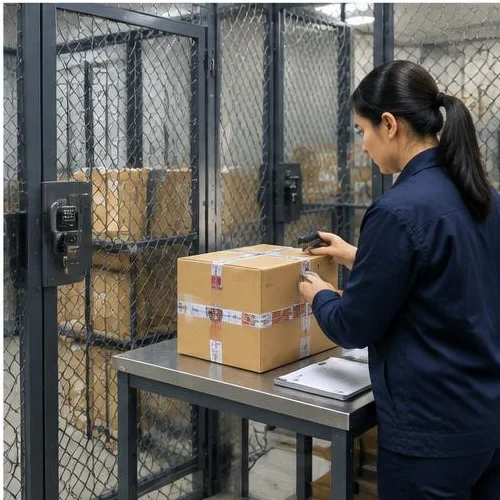
3. AFE and AE concern company authorization
Autorização de Funcionamento de Empresa, or AFE, and Autorização Especial, or AE, have distinct company-level functions. Verify their applicability, holders and coverage for the activities performed by the importer, manufacturer, distributor and other relevant participants. An authorization number on a commercial proposal does not establish that the entire chain is covered.
The manual addresses company requirements within its import procedures. Check the position of each participant, including intermediary arrangements or imports on behalf of another party or by order. Do not assume that one company's authorization automatically extends to another legal entity involved in the transaction. 1
Keep this assessment separate from product regularization and foreign-trade approvals. An AFE or AE does not constitute authorization for a specific consignment. Equally, registration of a medicine does not replace assessment of additional controls arising from its substance and the circumstances of its importation.
4. Controlled-product authorization and import consent are separate
Where a specific controlled-product import authorization is required, verify its procedure, conditions and relationship with sanitary consent for the transaction. Do not impose one sequence on every list and purpose. The appropriate approval must correspond to the actual product and situation described in the application.
Anvisa presents NDSWEB as a tool for requesting import and export authorizations for controlled medicines and substances, as well as endorsements. Having a system account is not equivalent to holding an approved authorization. Nor does the tool's existence establish that every category follows exactly the same process. 3
Also check the foreign-trade route applicable when the operation is registered. Our licensing and LPCO guide helps distinguish an application, its approval and its linkage to a declaration. Do not mistake a specific controlled-product authorization for automatic satisfaction of every other sanitary and customs requirement affecting the consignment.
5. Build consistent product and batch evidence
Create an internal matrix connecting substance, list, presentation, manufacturer, product-regularization holder where relevant, importer and purpose. Then attach the documents actually required for that hypothesis. This matrix is a working recommendation, not an official form or a universal statutory list of mandatory fields.
Compare technical and commercial documents with the authorization requested. Finished-product quantity, substance mass and concentration are not interchangeable measurements. Where a procedure requires a particular conversion or calculation, confirm the accepted method and unit before completing the relevant submission. Avoid transferring figures without understanding what they represent.
For batch-related documents, establish that the evidence corresponds to the manufacture and presentation being shipped. Use the manual to select relevant attachments rather than importing requirements from another category. If decisive information is missing, identify the gap explicitly: a generic certificate should not conceal insufficient product identification. 1
6. Hypothetical example: substitution during negotiation
An industrial importer plans to buy a controlled medicine from a manufacturer already assessed by its team. It checks company authorizations, identifies the substance list and prepares the evidence for the commercial purpose. Before shipment, the supplier proposes a different presentation and manufacturing site to preserve the delivery plan.
The team does not assume equivalence. It reviews product regularization, manufacturer evidence, authorization coverage and transaction information. It checks which changes are permitted, which need examination and whether a new application would be necessary. Meanwhile, it avoids releasing shipment using documents for the previous configuration.
This example is hypothetical and does not prescribe a regulatory solution for a particular list. It demonstrates that valid company authorization does not remove the need for alignment between the authorized product, its supporting documentation and the batch actually presented for inspection at the border.
7. Decision Checklist and handling document requests
When an authority requests clarification, answer the actual question and retain the submitted version. Do not amend only the invoice where the underlying change also affects the authorized object. If the decision's scope is unclear, treat that uncertainty as an operational hold point rather than assuming the process can continue without further review.
8. FAQ: important boundaries for importers
Can a personal-purchase rule be used for resale? Not automatically. Commercial purpose requires its own classification; imports by patients are outside this article's scope.
Do AFE and AE replace shipment authorization? No. They operate at a different level, and transaction-specific approval depends on the applicable hypothesis.
Do all controlled products need exactly the same documents? No. Lists, purpose, product category and arrangement can change the procedure. The manual supports selection but does not replace the law.
Is there a universal clearance time? No. Requests, inconsistencies and transaction characteristics may alter the path. To organize an assessment before purchase, contact us with the composition, intended purpose and proposed participants.