

RENAVAM and CAT: imported-vehicle homologation without confusing the codes
Understand Senatran’s role, the make/model/version code and individual registration through Detran.
Checked: 2 November 2026. This article supports transaction planning and does not guarantee approval. Check the current treatment by NCM classification, attributes, purpose and customs regime before contracting or shipping; consolidated administrative texts do not replace the official gazette, DOU.
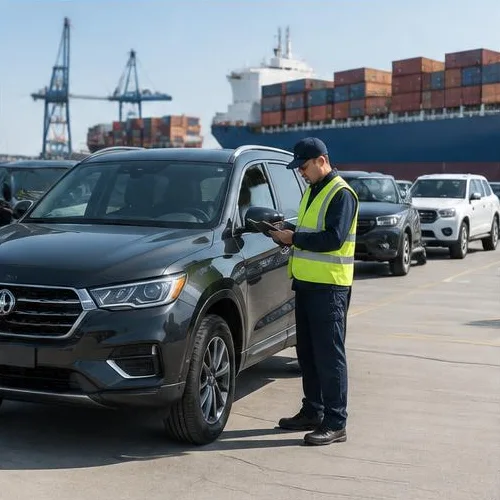
Organize the sequence, not one catch-all acronym
For imported vehicles, customs clearance and permission to circulate are not synonyms. Planning must cover commercial controls, environmental analysis and road homologation, followed by individual registration. A document obtained in one workstream does not automatically prove compliance in the others.
The correct spelling is RENAVAM: Registro Nacional de Veículos Automotores. “RENAVAN” is an error, not an alternative system. More important than correcting the letter is understanding the identification level. The make/model/version code identifies a configuration in the relevant process; the RENAVAM number identifies the individual vehicle. A spreadsheet that places both in the same field can generate incorrect requests and make document checking more difficult. Keep their names, purposes and supporting evidence separate from the start.
What CAT does
The Certificado de Adequação à Legislação de Trânsito, CAT, forms part of homologation through Senatran. The official service connects CAT and the make/model/version code with pre-registration and later registration and licensing through the state or Federal District Detran. Do not present CAT as though it were already the individual vehicle document allowing circulation.
The service’s current procedural reference is Senatran Ordinance 990/2022, rather than legacy Denatran Ordinance 190/2009 as the primary roadmap. This matters when requesting manufacturer documents or engaging technical support: a list inherited from an old transaction may not match the present procedure. Begin with the current service and actual category, without inventing forms, tests or deadlines that the official sources have not confirmed.
The environmental boundary still matters
LCVM is not CAT. The environmental configuration license belongs to Ibama and Proconve within the applicable scope; LCM is the Promot route for relevant motorcycle and similar categories. These licenses are not road homologation or registration of each individual unit. Analysis of import consent is also separate from the environmental license itself.
Build a matrix showing the object, authority, document and next step. It should show, for example, that environmental evidence does not replace a CAT application and that the model code does not replace the individual number. For electric vehicles, special-purpose vehicles or off-road machinery, confirm the category and specific route. Do not automatically impose a passenger car’s road-registration sequence on every machine, while equally avoiding an unsupported assumption that all controls disappear.
CAT dispensation has a defined purpose
A dedicated service provides CAT dispensation for development, performance evaluation, testing and product presentation. Its guidance states that vehicles receiving the dispensation cannot be sold without CAT issuance. This is not a general waiver for every personal import or for someone who promises to drive only occasionally.
Assess the experimental purpose during planning. If the project changes to a sale, the commercialization restriction does not disappear because customs clearance has occurred or an environmental authorization exists. Do not use dispensation as a shortcut for commercial inventory. Check the applicable instrument and retain evidence of the actual purpose. This research does not confirm a universal duration or the complete conditions for every testing arrangement, so those details require transaction-specific verification.
Collector vehicles require their own workstream
Senatran’s collector-vehicle import service requests, among other items, an approved import-license extract, invoice, four photographs, CVCOL/originality documentation and evidence of collection-club membership. Its purpose includes granting a specific make/model/version code. Do not treat the code as retroactive customs approval or as completed individual registration.
The cultural import exception for vehicles manufactured more than 30 years ago is a different test. It is also not the only legal exception to the prohibition on used goods. Collection status for road purposes and commercial admissibility must be demonstrated separately. Modified vehicles deserve particular attention because the general collection definition and the import service’s eligibility wording differ. Resolving that distinction requires case-specific confirmation rather than a broad statement that every modified old vehicle qualifies.
Hypothetical example and document checklist
An importer receives an environmental license from the supplier and concludes that every unit can now be registered. Building the matrix reveals that CAT, the make/model/version code, pre-registration and the state-level stage still need examination. In a second transaction intended for testing, the importer identifies the sale restriction associated with dispensation and keeps that batch separate from commercial inventory.
FAQ: circulation and identification
Is CAT the RENAVAM number? No. These instruments operate at different levels, involving configuration and individual identification.
Is customs clearance enough to circulate? By itself it does not establish completion of road requirements.
Does own use always remove CAT? The verified dispensation has defined development, evaluation, testing and presentation purposes; it is not a universal personal-import waiver.
Is homologation timing guaranteed? Not by this research. Review depends on scope and documentation, and no adviser can replace the administrative decision.
Team handovers without losing vehicle identity
As a recommended internal control, build a handover matrix with separate fields for configuration, CAT reference, make/model/version code and individual identification when available. Associate each document with its object rather than inserting another identifier merely to complete a spreadsheet. Record who prepares, checks and receives the package for the next stage.
The technical team should communicate version changes to the regulatory coordinator; the import owner hands over transaction documents; the individual-registration team checks correspondence with each unit. This practical allocation does not replace official responsibilities or turn the coordinator into a homologation authority.
When a correction occurs, retain the previous file, explain the reason and notify recipients who received the superseded version. For test vehicles, keep the purpose and commercialization restriction described in this article visible. A commercial decision to sell should trigger a fresh workflow review, not merely a folder rename. Record outstanding questions and conclusions without promising registration or number plates.
Official sources and next steps
- Senatran: emissão de CAT
- Senatran: dispensa de CAT
- Senatran: importação de veículo de coleção
- Ibama: LCVM e Proconve
Return to the origin page, explore LCVM and LCM, collector vehicles, import licensing and LPCO, or contact our team to organize a document review. Advice cannot replace the competent authority’s decision.